Detecting fruit notes in dark chocolate is not a gift, but a trainable skill of decoding sensory signals your brain currently mislabels as “bitter.”
- Bitterness often masks flavor due to palate fatigue or excessively high cacao percentages that overwhelm your senses.
- A chocolate’s true “aromatic blueprint” is determined by its origin, roast level, and processing—not just its intensity.
Recommendation: Begin your training with 70-75% single-origin chocolate and follow a structured tasting protocol to calibrate your palate and brain.
You unwrap a bar of 70% dark chocolate, promised with notes of raspberry and cherry. You take a bite, let it melt, and… nothing. All you perceive is a wall of uniform bitterness. It’s a frustrating experience common to many aspiring connoisseurs. You might think your palate is simply not “sophisticated” enough. You’ve likely heard the standard advice: use a flavor wheel, cleanse your palate, or just “concentrate harder.” While well-intentioned, this advice misses the fundamental point.
But what if the problem isn’t your tongue, but your brain’s interpretation of the signals it receives? What if “bitter” is simply the default label for a complex array of sensations you haven’t yet learned to differentiate? The ability to taste nuanced flavors is not an innate talent but a developed skill, much like learning a language or identifying musical notes. It is a process of deliberate sensory decoding, where you train your brain to recognize and categorize subtle aromatic compounds it was previously ignoring.
This guide moves beyond generic tips. As a sensory coach, I will provide you with a systematic method to calibrate your palate. We will explore the science behind why certain chocolates are fruitier than others, how to perform a proper technical analysis, and the critical mistakes that lead to sensory burnout. By the end, you will have a clear roadmap to train your brain, dismantle the “wall of bitterness,” and finally unlock the rich, vibrant aromatic blueprints hidden within a great bar of chocolate.
To guide you on this journey of sensory discovery, this article is structured to build your skills progressively. The following sections will equip you with the knowledge and techniques used by professional tasters.
Summary: A Coach’s Guide to Detecting Red Fruit in 70% Chocolate
- Why Does Light Roast Cocoa Retain More Acidity Than Dark Roast?
- How to Use the ‘Snap, Melt, Breathe’ Technique for Proper Analysis?
- 85% vs. 99% Cacao: Is Higher Always Better for Connoisseurs?
- The Tasting Mistake That Numbs Your Tongue After 3 Samples
- What Drink Cuts Through the Bitterness of 90% Dark Chocolate?
- Why Do Madagascan Beans Taste Fruitier Than Ghanaian Varieties?
- Why Do Taste Buds Regenerate Every 2 Weeks allowing Flavor Shifts?
- Single Origin vs. Blend: Which Bean Profile Fits Your Palate Best?
Why Does Light Roast Cocoa Retain More Acidity Than Dark Roast?
The first step in decoding flavor is understanding its origin: the bean and its roast. Many beginners assume “darker” means “stronger” flavor, but in sensory training, we learn that a dark roast often simplifies, rather than intensifies, the profile. The key lies in the chemistry of the roasting process. A light roast is a delicate conversation with the cocoa bean, preserving its inherent characteristics, including the very fruit notes you seek.
During roasting, the Maillard reaction creates the classic “chocolatey” flavors we all recognize. However, if this process is pushed too far into a dark roast, it begins to obliterate the bean’s more fragile compounds. These include fruity esters and bright organic acids. A dark roast favors the creation of pyrazines, which deliver roasty, nutty, and sometimes burnt or bitter notes. This process effectively flattens the chocolate’s aromatic landscape, leaving your brain with a monolithic, easy-to-label signal: “bitter.”
In contrast, a light roast gently develops the flavors while preserving the delicate acidity that translates to notes of citrus or red berries. This isn’t the sourness of a spoiled product, but a vibrant, pleasant brightness that lifts the entire flavor profile. For a palate in training, starting with light-to-medium roast chocolate is crucial. It provides a more complex, nuanced signal for your brain to analyze, making the job of sensory decoding easier and more rewarding.
How to Use the ‘Snap, Melt, Breathe’ Technique for Proper Analysis?
Once you’ve selected the right chocolate, the next step is to analyze it with the correct technique. Chewing a piece of fine chocolate is like fast-forwarding through a symphony. You’ll hear the noise but miss the music. The ‘Snap, Melt, Breathe’ method is the professional standard for slowing down the experience and allowing your brain to perform a full sensory decoding.
First, the Snap. Breaking a piece of well-tempered chocolate should produce a clean, crisp sound. As Ghirardelli’s experts demonstrate in their protocol, this indicates the presence of stable Form V cocoa butter crystals. This structure is not just for show; it ensures the chocolate melts smoothly and gradually on the tongue, releasing its aromatic compounds in a controlled sequence rather than all at once. Next, the Melt. Place the chocolate on your tongue and resist the urge to chew. Let it slowly dissolve. This phase warms the chocolate, beginning the release of its volatile compounds. This is where the magic begins.
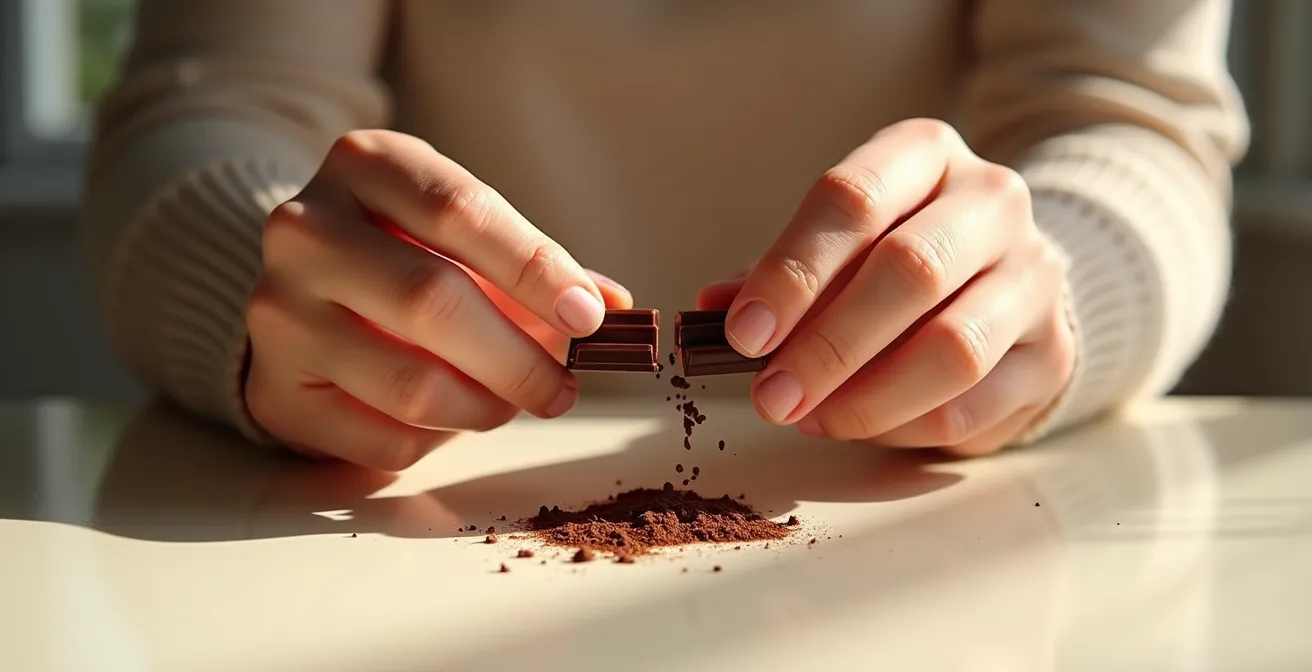
Finally, and most critically, the Breathe. As the chocolate melts, breathe gently through your mouth and out through your nose. This technique, known as retronasal olfaction, carries the aromatic compounds from your mouth to your olfactory receptors at the back of your nasal cavity. This is essential for proper flavor perception, a point underscored by a leading expert. As TCHO’s Chief Chocolate Maker, Brad Kintzer, states:
Flavor is 80% aroma and this technique is not just about breathing, but about warming the chocolate in the mouth to release volatile compounds.
– Brad Kintzer, TCHO Chief Chocolate Maker
Without this final step, you are only tasting—perceiving sweet, sour, salty, and bitter. By breathing, you are smelling from the inside, which is where the complexity of “flavor” is truly constructed by the brain.
85% vs. 99% Cacao: Is Higher Always Better for Connoisseurs?
A common misconception among beginners is that a higher cacao percentage equates to higher quality or a more sophisticated palate. This leads many to jump directly to 90% or 99% bars, only to be met with overwhelming bitterness that discourages further exploration. In sensory training, we understand that higher is not always better. In fact, for the purpose of detecting nuanced fruit notes, it’s often worse due to a phenomenon called sensory masking.
At extremely high percentages, the concentration of theobromine and polyphenols (which contribute to bitterness and astringency) is so intense that it floods your taste receptors. Your brain, overwhelmed by this powerful signal, is unable to process the subtler, more delicate aromatic compounds. Research from bean-to-bar chocolate experts shows that the 70-85% cacao range allows for the best detection of subtle fruit notes, while anything approaching 99% creates this sensory masking effect. The sweetness from the small amount of added sugar in a 70% bar actually helps to balance the bitterness, creating a space for the fruity and floral notes to emerge.
Think of it as trying to hear a violin in the middle of a heavy metal concert. The violin is there, but its sound is completely drowned out. The ideal range for training your palate is where the intensity is balanced, allowing for maximum flavor discovery. The following table breaks down how cacao percentage directly impacts your ability to perceive different flavor notes.
| Cacao % | Bitterness Level | Fruit Note Detection | Best Use |
|---|---|---|---|
| 70-75% | Mild | Excellent | Flavor exploration |
| 85-90% | Moderate | Good | Balance testing |
| 95-99% | Intense | Poor (masked) | Palate training |
For a beginner aiming to identify red fruit, starting in the 70-75% range is the most effective strategy. It provides the best possible conditions for your brain to succeed at its task of sensory decoding.
The Tasting Mistake That Numbs Your Tongue After 3 Samples
You’ve set up a flight of three different chocolates. The first tastes interesting, the second less so, and by the third, everything just tastes like waxy bitterness. You’ve just experienced palate fatigue, the single biggest saboteur of a tasting session. This isn’t a failure of your tongue; it’s a predictable physiological response to being overloaded. Understanding why it happens is the key to preventing it.
Palate fatigue has two primary causes. First is the physical buildup of compounds on your tongue. As explained by one certified expert, it’s a matter of saturation. According to Victoria Cooksey, an Ecole Chocolat Certified Chocolate Expert:
Palate fatigue occurs from the buildup of tannins on the tongue and the saturation of olfactory receptors in the nose, which stop sending new signals to the brain.
– Victoria Cooksey, Ecole Chocolat Certified Chocolate Expert
Tannins, which are a type of polyphenol, bind to proteins in your saliva, creating a feeling of astringency or dryness that numbs your taste buds. The second cause is olfactory habituation: your nose simply gets “tired” of smelling the same aromas and stops reporting them to your brain. To combat this, a strict protocol is necessary, with some surprising but effective rules revealed by a professional source. An analysis from Distinguished Beans showed that tasters experienced optimal flavor detection when following specific, sometimes counter-intuitive, steps between samples.
Action Plan: Professional Protocol to Prevent Palate Fatigue
- Rinse with Hot Water: Use hot (but not boiling) water between samples, not room temperature water. The heat is more effective at melting residual cocoa butter and washing away tannins from the tongue.
- Start with the Highest Percentage: Counter-intuitively, taste the most intense or highest percentage chocolate first. This prevents the sweetness of lower percentage bars from coating your palate and interfering with the perception of subsequent, more bitter samples.
- Limit Your Session: Restrict any single tasting session to a maximum of five or six different samples. Beyond this, sensory burnout is almost guaranteed, and your analysis will be unreliable.
- Take Mandatory Breaks: After a few samples, take a genuine break of 5 to 10 minutes. Step away, drink some water, and breathe neutral air to allow your olfactory receptors to reset.
- Use a Neutral Cracker: If water isn’t enough, an unsalted, plain cracker can act as a gentle abrasive to “scrape” the palate clean without introducing competing flavors.
Adhering to this protocol transforms your tasting from a race to an endurance event, ensuring your sensory tools remain sharp from the first piece to the last.
What Drink Cuts Through the Bitterness of 90% Dark Chocolate?
While we’ve established that 90% chocolate is not ideal for detecting subtle notes, sometimes you want to tackle the challenge. When faced with an intensely bitter or astringent bar, a strategic pairing can act as a “decoder ring,” altering your perception and revealing hidden complexity. The goal is to use a beverage to either contrast or complement the chocolate’s profile, cutting through the dominant bitterness to let other flavors shine.
The principles of pairing are based on food science. An astringent, dry-feeling chocolate is caused by polyphenols binding with proteins in your saliva. You can counteract this by introducing a beverage high in fat, like whole milk. According to pairing guides from experts like Zotter, the casein proteins in milk bind with the polyphenols, freeing up your palate. If the primary sensation is pure bitterness, a sweet beverage like a port wine can provide a contrasting element that balances the profile. If the chocolate feels overly rich or heavy, a drink with bright acidity, like kombucha or a light-roast coffee, can “cut” through the richness and refresh the palate.
It’s crucial to serve beverages at room temperature. A cold drink will cause the cocoa butter in your mouth to solidify, trapping flavors and preventing you from perceiving the chocolate’s full profile. The following table outlines the scientific principles behind some classic pairings for high-percentage dark chocolate.
| Beverage | Active Component | Effect on Bitterness | Best Match |
|---|---|---|---|
| Whole Milk | Casein & Fat | Binds polyphenols | Extreme astringency |
| Port Wine | Residual sugars | Balances bitterness | Complex dark chocolate |
| Hibiscus Tea | Natural acids | Cuts richness | Heavy mouthfeel |
| Cabernet Sauvignon | Fruity tannins | Complements complexity | Spicy chocolate notes |
By understanding these interactions, you can transform a challenging chocolate from a one-note experience into a dynamic conversation between food and drink.
Why Do Madagascan Beans Taste Fruitier Than Ghanaian Varieties?
Not all chocolate is created equal, because not all cocoa beans are. A critical part of your training is learning that a chocolate’s aromatic blueprint is largely determined before it even reaches the factory. The origin, genetics, and processing of the bean create its flavor potential. The stark difference between a fruity Madagascan bean and a classic “chocolatey” Ghanaian bean is a perfect case study in the importance of terroir.
The primary reason for this difference lies in genetics and chemistry. Madagascan beans are typically of the Trinitario variety, a hybrid known for its complex flavor. Ghanaian beans are predominantly Forastero, prized for its robustness and deep, consistent cocoa flavor, but with less aromatic complexity. This genetic predisposition is quantifiable; chocolate flavor chemistry research shows that Madagascan Trinitario beans contain up to 3x more fruity esters than Ghanaian Forastero. Esters are the chemical compounds responsible for many of the fruit and floral aromas we perceive.
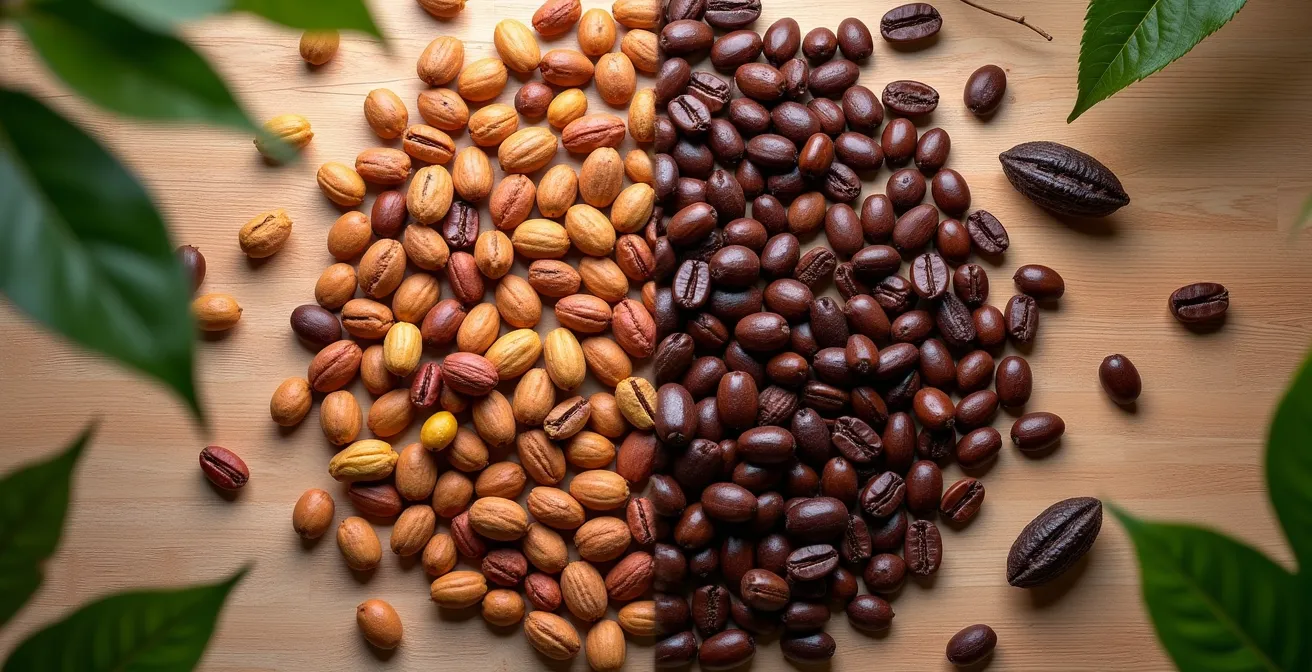
However, genetics are only part of the story. Terroir—the unique environment of the farm—and post-harvest processing play an equally crucial role. As highlighted by single-estate specialists like Firetree Chocolate, Madagascan beans often benefit from volcanic soil and controlled fermentation protocols. These specific fermentation methods encourage the growth of yeasts that are particularly effective at producing those desirable fruity esters, resulting in distinct notes of red fruit and citrus. In contrast, the bulk production common in Ghana prioritizes consistency for the mass market, using standardized fermentation that yields a reliable, but less unique, deep cocoa profile.
For a taster in training, seeking out single-origin Madagascan chocolate is a direct path to experiencing the red fruit notes you’re looking for. It provides a clear, strong signal for your brain to learn and memorize.
Why Do Taste Buds Regenerate Every 2 Weeks allowing Flavor Shifts?
It’s a fascinating biological fact that the taste cells on your tongue completely regenerate every 10 to 14 days. This might suggest that our ability to taste is constantly in flux, but it’s a red herring. While your hardware gets a regular update, the real work of tasting happens in your software: the brain. This is the single most important concept in sensory training, a point perfectly articulated by a leading chocolate sommelier.
As Estelle Tracy, an Ecole Chocolat Certified expert, emphasizes, the focus should be on cognitive training, not just physiological ability. Her insight reframes the entire process:
Training your palate is less about changing your tongue and more about teaching your brain to recognize and categorize the signals it receives more accurately.
– Estelle Tracy, Chocolate Sommelier and Ecole Chocolat Certified
Your tongue is a receptor, sending raw data upstairs. When a beginner tastes only “bitter,” it’s because their brain lacks the reference points to categorize that data into more specific labels like “cherry,” “tobacco,” or “earth.” The solution is to consciously build a sensory memory library. This involves tasting real-world items not as food, but as data points. Smell fresh raspberries and consciously think “this is the aroma blueprint for raspberry.” Do the same with cherries, citrus, and other common chocolate notes. By building these reference memories, you give your brain the tools it needs for more sophisticated sensory decoding.
To put this into practice, you can follow a structured plan. A detailed guide from experts at Cocoa Runners suggests a progressive approach. Their method involves building a timeline for creating a sensory memory library and then applying it to chocolate tasting. This turns an abstract idea into a concrete training regimen:
- Weeks 1-2: Actively taste real raspberries, cherries, and citrus fruits daily. Don’t just eat them; smell them and focus on creating a clear mental “snapshot” of their aroma and taste.
- Weeks 3-4: Practice with 70% single-origin chocolate. As you taste, consciously search your memory for the fruit references you’ve just built.
- Weeks 5-6: Use a flavor wheel during your tastings. This is not a crutch, but a tool to help you put words to the sensations you’re perceiving, further refining your brain’s categories.
- Weeks 7-8: Conduct blind tastings of chocolates from different origins to test your brain’s ability to recognize and identify flavor profiles without visual cues.
- Ongoing: Keep a tasting journal. Documenting the flavors you detect helps solidify the learning process and allows you to track your progress over time.
Key Takeaways
- Palate training is brain training; you are teaching your brain to decode complex signals it currently labels as ‘bitter’.
- Start with 70-75% single-origin chocolate, ideally from a fruity origin like Madagascar, to provide your brain with clear, detectable notes.
- Always use the ‘Snap, Melt, Breathe’ technique and take structured breaks with hot water to avoid palate fatigue and sensory masking.
Single Origin vs. Blend: Which Bean Profile Fits Your Palate Best?
As you progress in your training, you will encounter two main categories of chocolate: single origin and blend. Understanding the purpose and philosophy behind each is the final step in becoming a discerning taster. Neither is inherently superior; they simply offer different experiences and serve different functions in your sensory education. For a palate in calibration, starting with single origin is the clear choice.
A single-origin chocolate is the purest expression of terroir. It’s made with beans from a specific country, region, or even a single farm. Its flavor profile is a direct reflection of that one place’s genetics, soil, and climate. This makes it an ideal training tool. Its aromatic blueprint is distinct and relatively consistent, allowing you to learn what, for example, a Madagascan or an Ecuadorian bean truly tastes like. It is the solo instrument you must learn to recognize before you can appreciate the orchestra.
A blend, on the other hand, is an act of artistry. A master blender combines beans from multiple origins to create a specific, balanced, and harmonious flavor profile that may be impossible to achieve with any single bean. As a case study from Fruition Chocolate Works shows, this is a highly skilled craft. They might combine the floral notes of an Ecuadorian bean with the deep cocoa base of a Ghanaian bean and the bright acidity of a Madagascan bean to create a multi-layered “flavor symphony.” This proves that a blend is not a compromise on quality but rather an intentional creation.
| Aspect | Single Origin | Blend |
|---|---|---|
| Flavor Profile | Unique, distinctive, variable | Balanced, consistent, harmonious |
| Best For | Training palate, identifying notes | Daily enjoyment, reliable experience |
| Complexity | Pure expression of terroir | Orchestrated flavor symphony |
| Quality Indicator | Transparency & traceability | Blending expertise & craft |
Your training path should start with single origins to build your sensory library. Once you can confidently identify the characteristic notes of different regions, you will be equipped to truly appreciate the complexity and artistry of a well-crafted blend.
Now that you have the complete toolkit of a sensory professional—from technique and theory to an actionable training plan—the only remaining step is practice. Calibrating your palate is a journey, not a destination. Each bar you taste is a new opportunity to refine your brain’s ability to decode flavor and discover the incredible complexity hidden within cocoa.