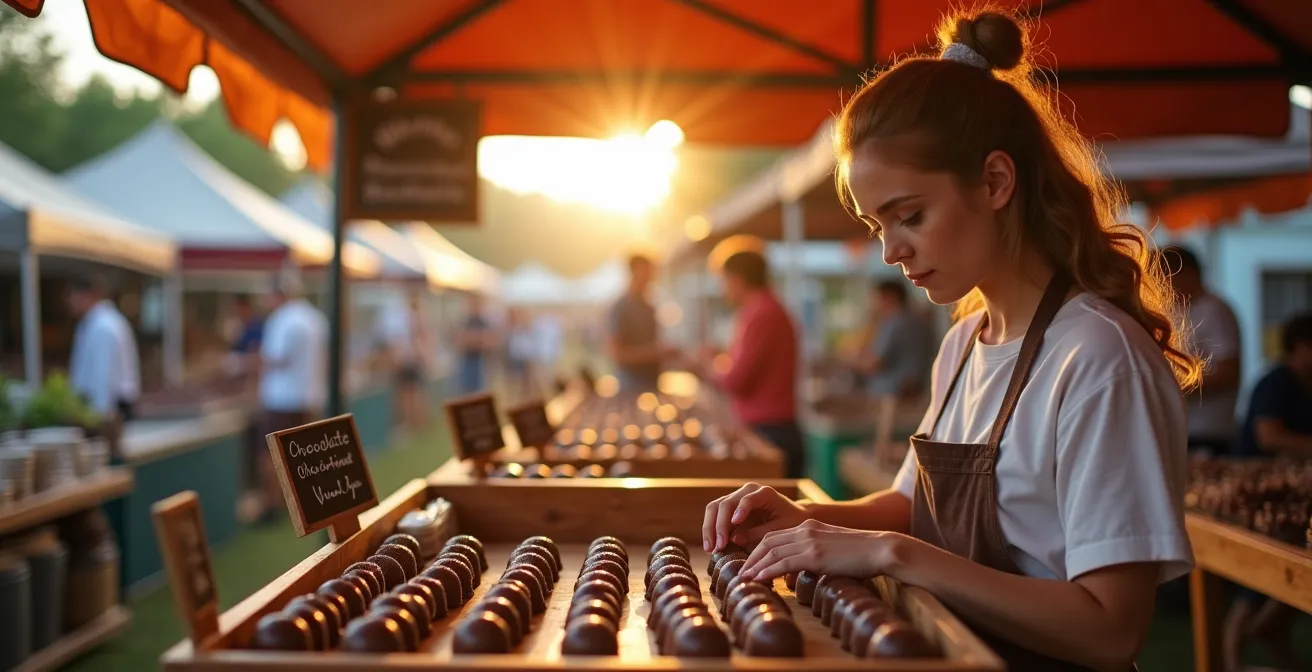
In summary:
- Stop using a simple cost-plus formula; your price should reflect the perceived value you engineer.
- Link your pricing directly to shelf life: price fresh, perishable items as premium specials and stable items for bulk/gift sales.
- Use packaging as a strategic lever—a rigid box justifies a higher price than a clear bag for the exact same chocolates.
- Treat legal requirements like allergen labeling not as a cost, but as a trust-building feature that can command a premium.
- Your story and visual design are not fluff; they are direct inputs into your pricing model that justify a higher margin.
You’ve spent hours perfecting your ganache, days mastering the delicate art of tempering, and your friends and family rave about your creations. Now, standing at the precipice of turning your passion into a side hustle, you face the most daunting question: “What do I charge for this?” For many home chocolatiers, this is where the joy of creation meets the cold reality of business. The initial impulse is often to just cover ingredient costs and add a little extra, a strategy that almost guarantees you’re undervaluing your skill and time.
The common advice is to calculate your Cost of Goods Sold (COGS), look at competitors, and add a markup. While these are parts of the equation, they are merely tactical inputs. They don’t form a strategy. This approach often leads to a price war at the low end of the market, a place where an artisan can’t compete with mass production. It ignores the subtle, yet powerful, levers that truly dictate what a customer is willing to pay at a local market stall.
But what if the key to profitable pricing wasn’t found in a spreadsheet alone, but in a holistic philosophy of value engineering? This guide proposes a new perspective: instead of pricing the product you’ve made, you will learn to design your product, process, and presentation to justify the price you need to charge. We will move beyond simple cost-plus and into a world where shelf life, packaging, allergen transparency, and even the visual design of your bonbons become powerful tools in your pricing strategy.
This article provides a complete roadmap, from understanding the science of shelf life to designing Instagram-worthy creations. Follow along to build a pricing model that not only covers your costs but truly reflects the artistry and value of your homemade chocolates.
Summary: How to Price Your Homemade Chocolates for Profit at Local Markets?
- Why Do Some Fillings Mold in a Week While Others Last Months?
- How to Scale a Recipe from 20 to 500 Bonbons Efficiently?
- Clear Bags vs. Rigid Boxes: Which Increases Perceived Value More?
- The Allergen Labeling Mistake That Can Shut Down Your Small Business
- When to Start Marketing Your Christmas Collection for Maximum Pre-Orders?
- Why Are ‘Micro-Batch’ Bars Costing $12 Becoming Popular?
- Is Valrhona Worth 3x the Price of Callebaut for a Birthday Cake?
- How to Design Signature Bonbons That Stand Out on Instagram?
Why Do Some Fillings Mold in a Week While Others Last Months?
The secret to why one chocolate spoils quickly while another endures lies in a concept called water activity (aW). This isn’t about how much water is in a filling, but how much of that water is “free” and available for microbes like mold and bacteria to use. A fresh cream ganache has high water activity, making it a perfect breeding ground and giving it a shelf life of days or a week. In contrast, a pure caramel or a solid praline has its water molecules bound up with sugar, resulting in very low water activity and a shelf life of months.
Understanding this science is the first step in strategic pricing. Instead of seeing a short shelf life as a liability, you must frame it as a mark of premium quality. Your pricing strategy should be tiered based on this perishability. The highly perishable, fresh-cream ganaches are your “eat-today” specials. They command a higher price per piece because they represent the peak of freshness and craft, an experience that cannot be stockpiled.
Conversely, your more stable items like caramels, solid bars, or nut-based fillings are your workhorses. These can be bundled into larger, more profitable gift boxes and sold for multi-unit purchases. This tiered approach allows you to capture different customer intentions: the impulse buyer seeking a single, exquisite treat (premium price) and the gift-giver looking for a beautiful, lasting assortment (volume sale). You are no longer just selling chocolates; you are selling different experiences at different price points, all dictated by the science of your fillings.
Action Plan: Maximize Profit from Different Shelf Lives
- Calculate a base price for all standard, stable products using a formula like Cost of Goods Sold (COGS) multiplied by 2.5 to 3.5.
- Label your fresh cream ganaches with an enticing and urgent message, such as “Made this morning, enjoy within 3 days,” to justify a premium price point.
- Create specific gift sets and larger assortments exclusively with your stable items like caramels and pralines to encourage bulk purchases and higher transaction values.
- Apply a seasonal premium of 15-30% on all products during peak holidays like Valentine’s Day, Mother’s Day, and Christmas when demand is highest.
- Ensure solid chocolates are stored at a consistent room temperature to prevent condensation and sugar/fat bloom, which drastically reduces their sellable value and visual appeal.
How to Scale a Recipe from 20 to 500 Bonbons Efficiently?
Scaling from a small hobby batch to 500 bonbons isn’t about multiplying your recipe by 25. That path leads to chaos, mistakes, and obliterated profit margins. Efficient scaling is about workflow optimization and task batching. Professionals operating at farmers’ markets don’t make 500 bonbons from start to finish in one go. They break the process down into logical, dedicated stages spread across several days.
A typical professional workflow might look like this: Day 1 is dedicated entirely to making and setting all the different ganaches and fillings. Day 2 is for “shelling,” where all polycarbonate molds are polished and coated with tempered chocolate. Day 3 is for filling the shells, and Day 4 is for capping, demolding, and packaging. This systematic approach dramatically reduces cleanup time, minimizes the mental load of task-switching, and ensures consistency across a large batch. It transforms your kitchen from a creative space into a micro-factory for a few days, which is essential for profitability.
This efficiency is crucial because labor is your most expensive and underestimated cost. By batching tasks, you reduce the labor time per bonbon, directly protecting your profit margin. It’s this level of organization that makes scaling a home-based business viable. Indeed, many home-based chocolate businesses that master this workflow can achieve an impressive $50,000-$150,000 in annual revenue within their first two to three years. It starts with thinking like a manufacturer, not just a cook.
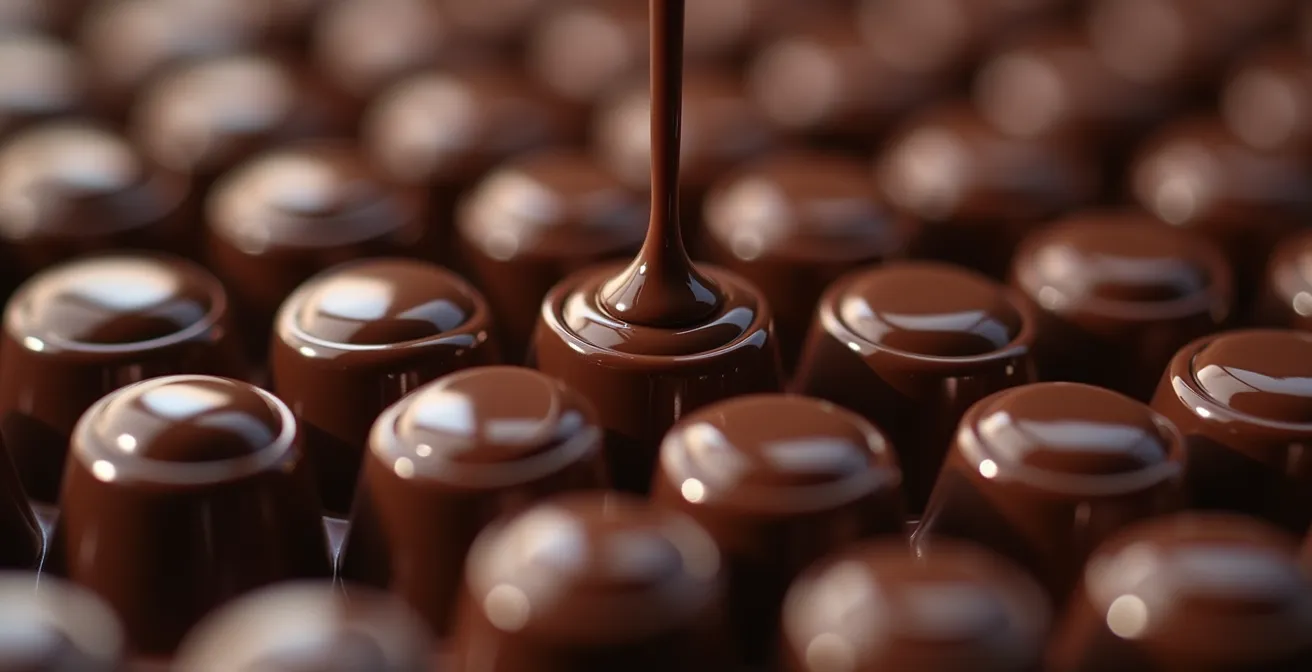
As you can see, the precision required for large-scale production demands a flawless process. Every step, from tempering the chocolate to filling the molds, must be executed with efficiency to maintain both quality and profitability.
Clear Bags vs. Rigid Boxes: Which Increases Perceived Value More?
The choice between a simple cellophane bag and a structured gift box is one of the most powerful pricing decisions you will make. It’s a perfect example of perceived value arbitrage: the ability to charge significantly different prices for the same product based purely on its presentation. The answer is unequivocal: a rigid box dramatically increases the perceived value and the price a customer is willing to pay.
A clear bag positions your chocolates as a casual, low-friction impulse buy. It’s perfect for “tasting sales” or for a customer treating themselves. The low packaging cost allows for a high-margin, low-price-point item that can draw people to your stall. Think of it as your entry-level offering, designed to get your product into as many hands as possible.
A rigid box, however, transforms the very same chocolates into a premium gift. It communicates quality, care, and significance. It’s no longer just candy; it’s a thoughtful present for a special occasion. This shift in perception allows you to move from selling individual pieces for a couple of dollars to selling a collection for $25, $35, or more. While the unit cost of the box is higher, the corresponding leap in retail price more than compensates, positioning your brand in a more premium segment.
A smart strategy uses both. You need the accessible, clear-bagged items for samples and quick sales, and the elegant, rigid boxes to capture the high-value gift market. The key is to ensure your packaging costs remain a controlled part of your overall COGS—ideally under 15%—by using clever branding like sticker seals and ribbons on mid-tier products before committing to fully custom, expensive boxes.
This comparative analysis, drawn from an in-depth look at artisan chocolate pricing, breaks down the strategic use of different packaging tiers.
| Packaging Type | Unit Cost | Best Use Case | Price Point | Profit Impact |
|---|---|---|---|---|
| Clear Cellophane Bags | $0.15-0.30 | Impulse buys, samples | $2.50 each, 3/$7 | High margin, low friction |
| Small Gift Boxes | $1-2 | 4-8 piece collections | $15-25 | Moderate margin, gift-ready |
| Premium Rigid Boxes | $3-5 | 12+ piece assortments | $35-50 | Lower margin, high perceived value |
The Allergen Labeling Mistake That Can Shut Down Your Small Business
For a cottage food business, improper allergen labeling isn’t just a minor oversight; it’s an existential threat. A single allergic reaction traced back to your product can lead to legal action, reputational ruin, and the immediate shutdown of your operation. However, instead of viewing allergen management as a dreaded cost center, you should see it as a profound opportunity to build trust and create a premium product line.
Transparency is the cornerstone of trust. Successful home-based chocolatiers are meticulous about compliance. This means clearly labeling all major allergens (e.g., “Contains: Milk, Soy, Tree Nuts“) in bold text on every package. It also involves including a disclaimer about your products being made in a home kitchen that handles other allergens and using “May contain” warnings for potential cross-contamination. This honesty doesn’t deter customers; it reassures them that you are a professional who takes their safety seriously.
This foundation of trust allows you to go a step further and monetize your diligence. By creating a dedicated, certified allergen-free line (e.g., dairy-free, nut-free), you can cater to a desperate and underserved market. These customers are not just willing but eager to pay a premium for chocolates they can consume with confidence. In fact, specialty products marketed as allergen-free can often command a 15-30% price increase over standard offerings. This turns a legal necessity into a competitive advantage and a significant revenue stream.
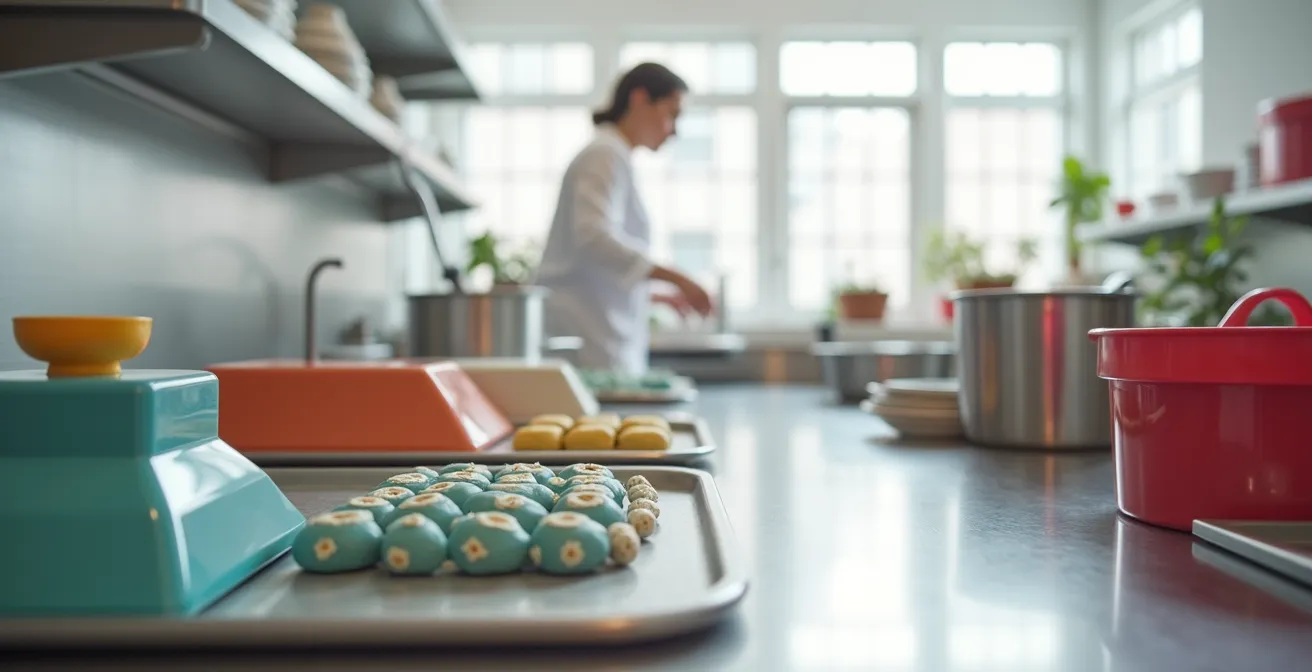
A clean, organized workspace is the physical manifestation of your commitment to safety. Distinct preparation zones and meticulous processes are non-negotiable when dealing with allergens and are a key part of the story you tell your customers.
When to Start Marketing Your Christmas Collection for Maximum Pre-Orders?
For a small chocolate business, the holiday season is a make-or-break period. Success isn’t determined in December; it’s forged in October. The key to maximizing revenue and minimizing stress is a strategic, multi-phase pre-order campaign. You must stop thinking about selling products and start thinking about selling production slots.
Your holiday marketing timeline should begin well before anyone is thinking about carols. The first phase starts in early to mid-October. This is when you launch your “Early Bird” pre-orders. Target your most loyal customers with an exclusive offer: a 10% discount or a bonus piece for committing early. This generates crucial early cash flow and gives you a preliminary forecast of demand.
Phase two launches in early November. This involves releasing a small, affordable “Tasting Trio” of your new Christmas flavors for a low price point ($5-8). This is a brilliant marketing tool. It allows customers to sample the new collection with low risk, generates more cash flow, and creates buzz that fuels the main pre-order wave. Finally, in mid-November, you open standard pre-orders at full price, often requiring a deposit. By this point, you have built momentum and can frame it as “reserving your limited production slot before we sell out.” This creates urgency and positions your craft as an in-demand, artisanal product, a far more powerful message than simply “buy now.” This approach transforms marketing from a last-minute scramble into a strategic financial tool.
Why Are ‘Micro-Batch’ Bars Costing $12 Becoming Popular?
The rise of the $12 chocolate bar seems to defy conventional logic. How can a small bar compete with a mass-market brand that costs a fraction of the price? The answer is that they aren’t selling the same thing. The mass-market bar sells chocolate. The micro-batch bar sells a story. This is the power of the “Narrative Premium.”
Bean-to-bar chocolate makers have mastered the art of transforming a commodity into an experience. They achieve staggering profit margins—often 70-80%—by controlling and, more importantly, *communicating* the entire process. They don’t just list ingredients; they tell you about the specific farm in a remote region where the cacao beans were grown. They introduce you to the farmers. They create content, like the successful YouTube channels used by brands like Manoa Chocolate, that educates customers on the intricate processes of fermentation, roasting, and conching.
This storytelling elevates the product. The customer isn’t just buying a treat; they are buying a piece of agricultural art. They are supporting a specific ethos of ethical sourcing and craftsmanship. The $12 price tag is no longer just for cacao and sugar; it’s for the transparency, the origin story, the maker’s expertise, and the feeling of participating in a specialized food movement. For a home chocolatier, this is a vital lesson: even if you aren’t bean-to-bar, telling the story of your unique flavor pairings, your choice of local ingredients, or your meticulous hand-painting process adds tangible value that justifies a premium price.
Is Valrhona Worth 3x the Price of Callebaut for a Birthday Cake?
This question is a classic trap for emerging chocolatiers. It frames the choice of chocolate as a simple “good vs. better” dilemma. The strategic question is not “Is it worth it?” but rather, “Which ingredient choice allows me to justify the price point and profit margin I need for this specific product?” It’s about a calculated return on investment (ROI), not just taste.
Using a standard, high-quality chocolate like Callebaut is perfect for applications where other flavors are prominent—think flavored ganaches, inclusions, or milk chocolates. Its lower cost allows for competitive base pricing, driving higher volume sales without sacrificing quality. It’s the reliable engine of your product line.
A premium chocolate like Valrhona, however, is a marketing tool. Its cost is justified only when the chocolate itself is the star of the show, such as in a pure, dark chocolate ganache or a single-origin bonbon. Using Valrhona (and naming it on your menu) allows you to add a significant price premium of 40-50%. You are borrowing the brand equity of Valrhona to elevate your own. The goal isn’t just a better-tasting product; it’s a higher-margin product. The choice to use it is a business decision, not just a culinary one.
At the highest end, using rare, single-origin couverture positions you as a luxury brand. This justifies the highest price premiums (60-80%+) and is best reserved for signature creations and tasting experiences. Each tier of chocolate has a specific job in your pricing strategy.
This breakdown, based on an economic analysis of the chocolate industry, highlights the strategic role of your primary ingredient.
| Chocolate Type | Cost/kg | Best Application | Price Premium Justified | Profit Impact |
|---|---|---|---|---|
| Callebaut (Standard) | $15-20 | Flavored ganaches, milk chocolates | Base pricing | Higher volume sales |
| Valrhona (Premium) | $45-60 | Pure dark ganaches, single-origin bars | +40-50% retail price | Higher margin per unit |
| Single-Origin Couverture | $50-80 | Signature bonbons, tasting experiences | +60-80% retail price | Positions as luxury brand |
Key takeaways
- Price for Value, Not Cost: Your price is a reflection of the perceived value you create through story, packaging, and quality, not just a markup on ingredients.
- Strategy Over Tactics: A profitable pricing model is a cohesive system where shelf life, scaling efficiency, ingredient choices, and marketing work together to support your desired price point.
- Transparency is a Premium Feature: Being upfront about allergens and your handcrafted process builds trust that translates directly into customer loyalty and a willingness to pay more.
How to Design Signature Bonbons That Stand Out on Instagram?
In the age of social media, your bonbons are tasted with the eyes long before they are tasted with the mouth. An exceptional visual design is not merely decoration; it’s a fundamental part of your pricing strategy. A beautiful bonbon *looks* expensive, pre-justifying a premium price in the customer’s mind. Your goal is to design for the macro photo, creating a product that stops the scroll and communicates “artisan” at a glance.
This means thinking like a designer. Create cohesive visual themes for your collections, whether it’s the raw beauty of geodes, the delicate feel of spring blossoms, or the bold lines of Art Deco. Use textures that catch the light and create visual interest—a matte cocoa butter spray, a shimmer of edible gold leaf, or the intricate patterns of crystallized chocolate. Focus on clean lines and high contrast over busy, cluttered patterns, as these translate better in photography.
Most importantly, you must account for this artistry in your pricing. Calculate your “Artistry Time”—the extra minutes spent on hand-painting, airbrushing, or intricate mold preparation—and add a 20-30% premium to the base price of these specific bonbons. This is a direct charge for your skill as a visual artist. To reinforce this value, use Instagram and TikTok to post behind-the-scenes content. Showcasing the painstaking process of creating these edible jewels makes the final price feel not just justified, but a bargain for a piece of handcrafted art.
Now that you understand how to engineer value into every aspect of your product, from filling to final design, you have a complete framework for setting a price that reflects your true worth. Start applying these principles today to transform your passion into a profitable and sustainable business.