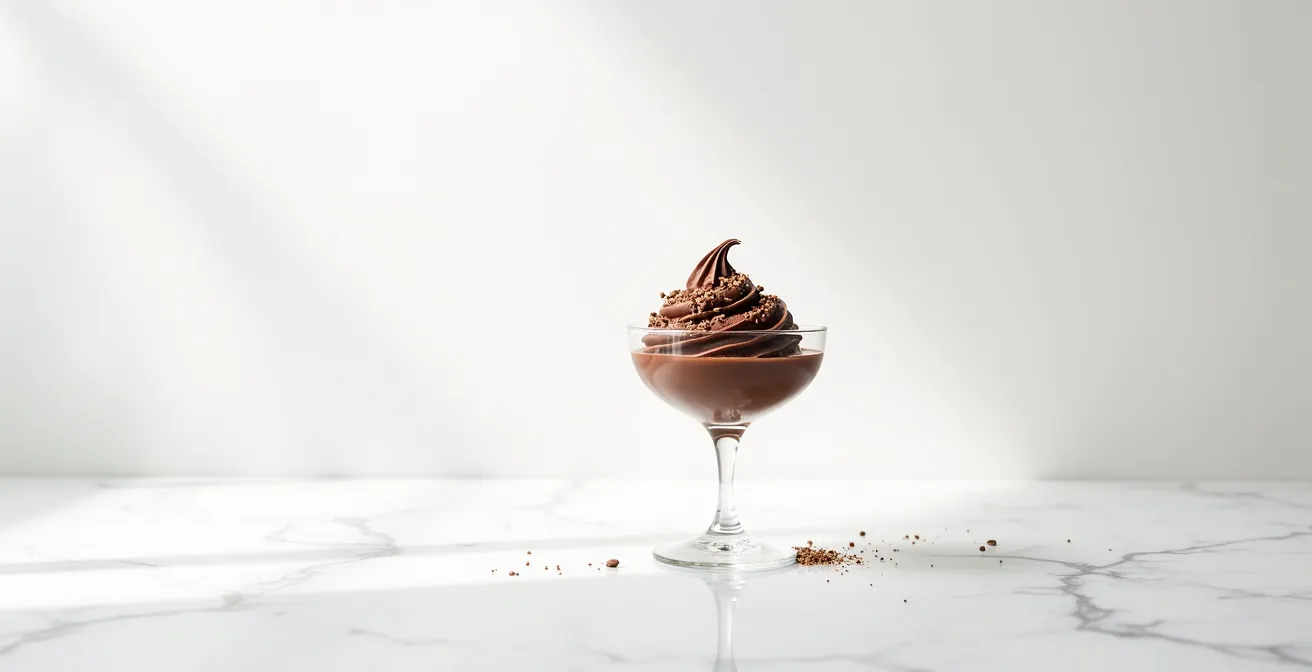
Fortifying vegan mousse with protein isn’t about adding powder; it’s about re-engineering its molecular structure for flawless texture.
- The secret to a stable, airy base lies in understanding the unique proteins and carbohydrates within aquafaba that allow it to mimic egg whites.
- Achieving a rich, buttery mouthfeel depends on creating a stable emulsion with the right plant-based fats, not just substituting ingredients.
Recommendation: To successfully incorporate protein, first create a smooth slurry with your protein powder and a small amount of a binder like unwhipped aquafaba. Then, gently fold this into your fully aerated aquafaba foam to maintain structural integrity.
For the fitness-conscious vegan, the world of desserts can feel like a frustrating compromise. You want the rich, decadent satisfaction of a classic chocolate mousse, but you also need to meet your protein macros. The typical solution—dumping a scoop of protein powder into a vegan recipe—often ends in disaster: a gritty texture, a chalky aftertaste, and a dense, sad puddle instead of an airy, cloud-like foam. It feels like you have to choose between indulgence and function, but you can’t have both.
Many recipes suggest using silken tofu or avocado, and while these can create creaminess, they don’t solve the fundamental structural problem of incorporating a dry, dense powder into a delicate foam. The common advice falls short because it treats dessert-making like simple mixing rather than what it truly is: food science. The key isn’t to mask the protein powder, but to build a stable molecular structure around it.
This is where we shift our perspective. Instead of thinking like a home cook simply following steps, we will think like a chef and a nutritionist. The real secret to a high-protein vegan mousse that rivals its dairy-based counterpart lies not in the ingredients you add, but in understanding *why* certain ingredients work. It’s about leveraging the principles of emulsions, foams, and molecular chemistry to create a dessert that is both structurally sound and delicious.
In this guide, we will deconstruct the science behind high-performance vegan desserts. We will explore how to create stable foams, choose fats that replicate butter’s mouthfeel, and understand the chemical interactions that can make or break your final product. Get ready to transform your approach from simple substitution to intelligent construction.
Contents: The Science of a Perfect Vegan Protein Mousse
- Why Does Chickpea Water Whip Like Egg Whites?
- How to Use Avocado as a Butter Substitute in Chocolate Fudge?
- Oat Milk vs. Almond Milk: Which Ganache Sets Firmer?
- The Mistake of Using Unrefined Coconut Oil That Makes Everything Taste Like Sunscreen
- When to Use Flax Eggs vs. Chia Eggs in Chocolate Cookies?
- How to Replace Eggs in Brownies Using Aquafaba for Identical Results?
- Why Do You Fold Egg Whites Gently Instead of Whisking?
- Dairy vs. Non-Dairy: Which Milk Blocks the Absorption of Cocoa Antioxidants?
Why Does Chickpea Water Whip Like Egg Whites?
The magical transformation of chickpea brine, or aquafaba, into a stable, white foam is the cornerstone of modern vegan pastry. This isn’t just a kitchen hack; it’s a fascinating display of food chemistry. Unlike simple sugar and water, aquafaba contains a specific cocktail of molecules that leak from the chickpeas during cooking: proteins and carbohydrates. Research reveals that specific proteins and carbohydrates in the 30-100 kDa molecular size range are the primary agents responsible for its remarkable foaming abilities.
When you whisk aquafaba, two things happen. First, the mechanical action denatures the proteins, causing them to unfold from their coiled state. These unfolded protein strands then rearrange themselves around the air bubbles you’re incorporating, forming a protective, flexible film. This is very similar to what happens with egg whites. However, aquafaba has an extra weapon: soluble carbohydrates and saponins. These components increase the viscosity of the liquid and work alongside the proteins to further stabilize the foam structure, making it less prone to collapse.
For a protein-fortified mousse, the quality of this initial foam is non-negotiable. A stronger, more stable aquafaba foam has a greater capacity to hold additional ingredients, like a protein slurry, without deflating. The best aquafaba is typically the thick, slightly gelatinous liquid from canned, unsalted chickpeas, or the reduced liquid from pressure-cooking your own. This higher concentration of proteins and starches provides the structural integrity needed to support the weight of added protein.
How to Use Avocado as a Butter Substitute in Chocolate Fudge?
Replacing butter in rich desserts like fudge or mousse isn’t just about matching the fat content; it’s about replicating the mouthfeel and structural role that solid fat plays. Avocado is an excellent candidate, but it works very differently from butter at a molecular level. The key lies in understanding the ratio of saturated to unsaturated fats and how to create a stable emulsion.
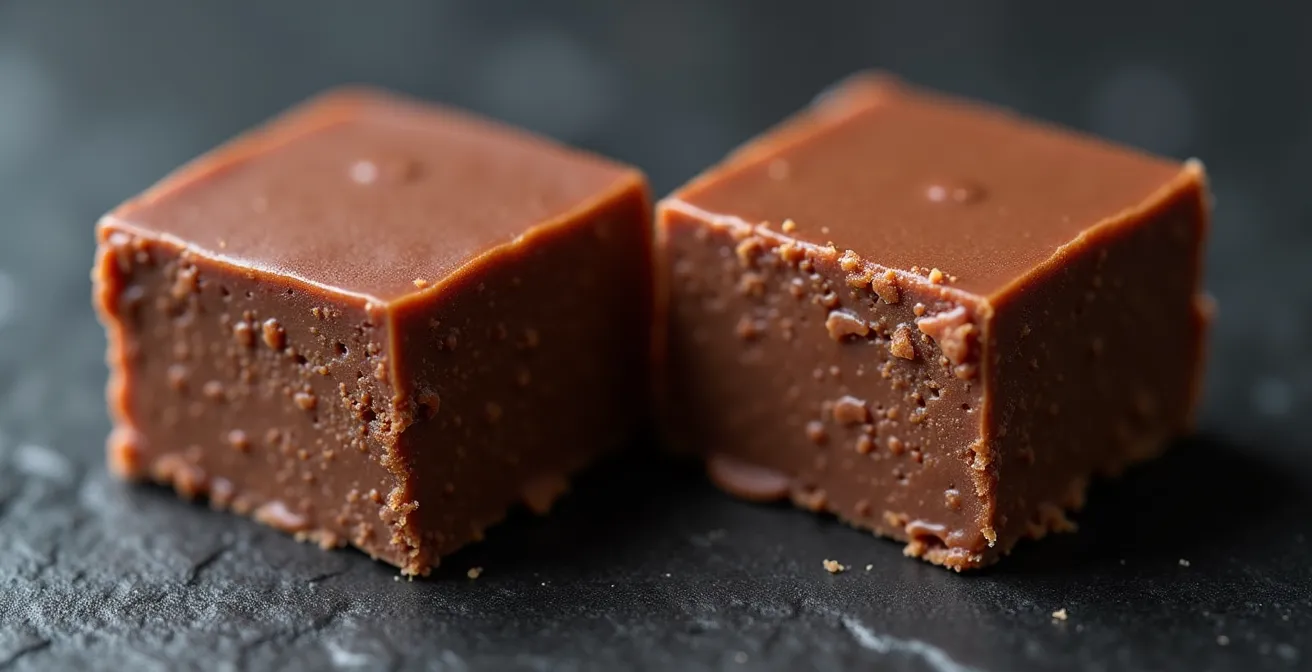
As the table below illustrates, butter is high in saturated fat, which is solid at room temperature. This is what gives traditional fudge its firm, snappy texture. Avocado, conversely, is dominated by monounsaturated fats, which are liquid at room temperature. Simply swapping one for the other will result in a soft, pudding-like consistency rather than a firm fudge. To succeed, you must use the avocado to create an emulsion—a stable mixture of fat and water—with the other ingredients, primarily the melted chocolate. When blended at high speed, the avocado’s fat globules disperse and become suspended within the chocolate, creating a thick, creamy, and smooth texture that sets firm upon chilling, mimicking the richness of butter without the saturated fat.
| Fat Type | Avocado | Butter | Texture at 20°C |
|---|---|---|---|
| Monounsaturated | 71% | 21% | Liquid |
| Saturated | 13% | 51% | Solid |
| Polyunsaturated | 16% | 3% | Liquid |
The trick is to ensure the avocado is perfectly ripe and completely smooth before incorporating it. Any lumps will disrupt the emulsion and result in an uneven texture. The avocado’s mild flavor is easily masked by high-quality dark chocolate, making it a functionally neutral and nutritionally superior fat source for dense, creamy desserts.
Oat Milk vs. Almond Milk: Which Ganache Sets Firmer?
When creating a vegan ganache, a key component of many chocolate mousses and tarts, the type of plant-based milk you choose has a dramatic impact on the final texture. The question of whether oat milk or almond milk creates a firmer result comes down to their fundamental composition: starch and fat content.
Oat milk is the clear winner for a firmer, creamier ganache. The reason is twofold. First, oats are naturally higher in soluble fiber and starches. When heated with chocolate, these starches gelatinize, acting as powerful thickening agents that create a fuller body and a more stable emulsion. Second, many commercial oat milks, especially “barista blends,” contain added oils and emulsifiers (like sunflower lecithin or gellan gum) specifically designed to create stable microfoams for lattes. These same properties are a huge asset in ganache, helping the mixture stay smooth and resist splitting.
Almond milk, on the other hand, is primarily water. It has a much lower fat and protein content and virtually no starch. Consequently, a ganache made with standard almond milk is more likely to be thin, watery, or “break,” with the cocoa solids separating from the liquid. While you can achieve a decent result by using a higher ratio of chocolate or by adding a separate fat like coconut cream, it requires more manipulation. For a reliable, one-to-one substitution for dairy cream that yields a naturally thick and stable set, oat milk provides a far superior structural foundation.
The Mistake of Using Unrefined Coconut Oil That Makes Everything Taste Like Sunscreen
One of the most common pitfalls in vegan baking is grabbing unrefined (or “virgin”) coconut oil for a recipe that requires a neutral fat. The result is often a dessert where the delicate flavor of chocolate or vanilla is completely bulldozed by an aggressive, tropical coconut flavor reminiscent of sunscreen. This isn’t a matter of opinion; it’s a matter of chemistry.
The potent aroma of unrefined coconut oil comes from specific volatile compounds. As a team of food scientists noted in the Journal of Food Science and Technology:
Medium-chain fatty acids and lactones are the specific chemical compounds responsible for the distinctive ‘coconut’ flavor that can overwhelm desserts.
– Food Science Research Team, Journal of Food Science and Technology
These compounds are preserved in unrefined oil but are removed during the refining process, which typically involves deodorizing and bleaching. Refined coconut oil is flavor-neutral and provides the same structural benefits—a high percentage of saturated fat that is solid at room temperature—making it ideal for creating flaky pie crusts or firm mousses. When a recipe calls for a neutral solid fat, using refined coconut oil is essential. If you want to avoid coconut oil altogether, other excellent neutral options exist, each with its own properties.
| Fat Type | Smoke Point | Room Temp Texture | Flavor Profile | Cost Rating |
|---|---|---|---|---|
| Refined Coconut Oil | 400°F | Solid | Neutral | $$ |
| High-Oleic Sunflower | 450°F | Liquid | Neutral | $ |
| Deodorized Cocoa Butter | 370°F | Solid | Mild chocolate | $$$ |
| Palm Shortening | 455°F | Solid | Neutral | $ |
When to Use Flax Eggs vs. Chia Eggs in Chocolate Cookies?
Flax and chia “eggs” are both staples in the vegan baker’s toolkit, but they are not interchangeable. Their distinct behaviors, particularly in recipes like cookies, are dictated by their unique mucilage properties—the gel that forms when they are mixed with water. The choice between them comes down to your desired outcome: chewy and dense, or crispy and spread out.
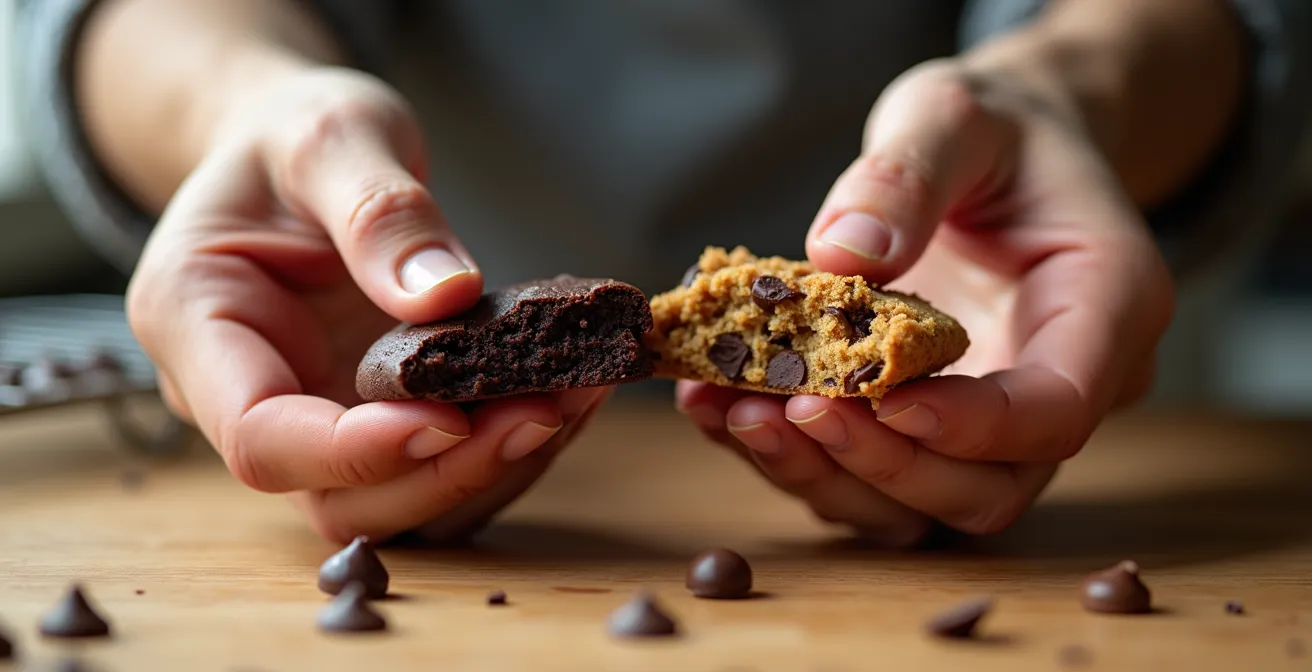
A flax egg (ground flaxseed and water) creates a viscous, potent binder. Its mucilage has a very high water-holding capacity. In a cookie dough, this means the flax gel effectively “steals” and locks away moisture that would otherwise be available to the flour and sugar. As explained in research from McGill University on binder properties, this results in a dough that spreads less during baking. The final product is a thicker, chewier, and denser cookie, making flax eggs ideal for brownie-like cookies or when you want to prevent excessive spread.
A chia egg (whole or ground chia seeds and water), conversely, forms a more delicate gel. While it also binds, it tends to release its water more readily when heated. This release of moisture during baking creates more steam and contributes to greater spread. The result is a cookie that is typically wider, thinner, and often has a crispier edge. The whole seeds can also add a slight textural crunch. Therefore, you should choose a chia egg when you’re aiming for a classic thin-and-crispy chocolate chip cookie or in recipes where a little extra spread is desirable.
How to Replace Eggs in Brownies Using Aquafaba for Identical Results?
Aquafaba is a uniquely versatile egg replacer in brownies because it can be used in two different ways to achieve two distinct textures: fudgy or cakey. Unlike other replacers, it can mimic both the moisturizing properties of the egg yolk and the leavening power of the egg white. However, it’s important to manage expectations; aquafaba contains only about 10% of the protein of egg whites by weight, so its structural contribution comes more from its starch content and foaming ability than from protein coagulation.
For intensely fudgy brownies, the goal is moisture and binding. Here, you should use aquafaba straight from the can, unwhipped. In this state, it acts as an excellent emulsifier, helping to bind the fat and sugar together to create that signature dense, moist crumb. Three tablespoons of unwhipped aquafaba can replace one whole egg.
For cakey brownies, you need aeration. In this case, you should whip the aquafaba to soft or medium peaks *before* folding it into the batter. The entrapped air acts as a leavening agent, creating a lighter, more open crumb structure similar to that created by whipped egg whites. One important tip for achieving that classic crackly top is to beat the sugar with the aquafaba (whether whipped or unwhipped) for an extended period. This ensures the sugar fully dissolves, which helps form a thin, meringue-like layer on the surface that cracks during baking.
Why Do You Fold Egg Whites Gently Instead of Whisking?
The principle of folding is just as critical for aquafaba foams as it is for traditional egg whites, and perhaps even more so given the foam’s slightly less robust protein structure. After painstakingly whipping air into your aquafaba to create a voluminous, airy base for your mousse, the goal is to incorporate other ingredients (like melted chocolate or a protein slurry) while losing as little of that trapped air as possible. This is where the gentle technique of folding becomes paramount.
Whisking is an act of aggression. It’s designed to incorporate air or break up clumps. When used on a delicate foam, it does irreparable damage. As the Food Science Institute explains in the Journal of Culinary Science & Technology, the difference in tools and motion is everything:
A whisk’s wires act like knives, slicing through millions of air pockets. A spatula acts like a raft, lifting and turning sections of batter and foam over each other with minimal damage.
– Food Science Institute, Journal of Culinary Science & Technology
Folding is a deliberate, three-dimensional movement. You use a wide spatula to cut down through the center of the mixture, scrape along the bottom of the bowl, and then lift and “fold” that portion over the top. With each turn of the bowl, you repeat the motion. This process gently integrates the heavier mixture into the lighter foam, preserving the maximum volume. Rushing this step or using a whisk will cause the foam to deflate, resulting in a dense, heavy mousse instead of a light and airy one. The structural integrity of your final dessert is built during whipping and preserved during folding.
Action Plan: Auditing Your Fortified Mousse
- Texture Check: Does the mousse hold a peak? If not, your aquafaba foam is unstable. Re-evaluate whipping time and the addition of a stabilizer like cream of tartar.
- Flavor Profile: Is there a ‘protein’ aftertaste? If yes, assess your protein source (isolate is more neutral) and flavor-masking agents like vanilla, espresso, or a pinch of salt.
- Mouthfeel: Is it gritty or smooth? Grittiness points to poorly dissolved protein powder. Create a smooth slurry with the powder and a small amount of liquid before folding.
- Stability: Does it deflate overnight in the fridge? Your emulsion is weak. Ensure your chocolate and fats are properly incorporated to create a stable matrix.
- Sweetness Balance: Is it overly sweet or bitter? The type of protein powder can affect sweetness. Adjust your sugar or liquid sweetener accordingly.
Key Takeaways
- The foaming power of aquafaba comes from a synergistic blend of proteins and carbohydrates, not just protein alone.
- Fat substitution is about chemistry: use the emulsifying properties of unsaturated fats (avocado) or the thickening power of starches (oat milk) to replicate dairy textures.
- Flavor control is critical. Use refined, neutral oils when you don’t want an ingredient’s taste to dominate, and understand that binders like flax and chia have distinct impacts on texture.
–
Dairy vs. Non-Dairy: Which Milk Blocks the Absorption of Cocoa Antioxidants?
For the health-conscious individual, the benefits of dark chocolate extend beyond taste to its high concentration of beneficial antioxidants, specifically flavanols like epicatechin. A common question, especially for a nutritionist, is whether adding milk to chocolate negates these benefits. The science here is nuanced, but the weight of evidence suggests that dairy milk, in particular, can interfere with antioxidant absorption.
The debate stems from conflicting research. Some smaller studies have found mixed results; for example, one study with 24 participants published in a nutrition journal noted that while milk protein altered the timing of absorption, it did not influence the average concentration of polyphenols in the blood over several hours. However, this finding is often contrasted with more foundational research.
A landmark study published in the prestigious journal Nature presented a clearer conclusion. Researchers found that the casein protein in dairy milk appears to bind with the flavanols in chocolate, forming complexes that the body may struggle to absorb. The study concluded that the antioxidant effects are markedly reduced when chocolate is consumed with milk. This suggests that while you might still get some benefits, you are not getting the full antioxidant payload that plain dark chocolate offers.
From a nutritional strategy standpoint, the takeaway is clear: to maximize the potential health benefits of cocoa’s antioxidants, it is best to consume it without dairy. Plant-based milks, which lack casein, are a much better choice. This makes a vegan chocolate mousse not only an ethical and allergen-friendly choice but also a nutritionally optimal one for unlocking the full potential of its core ingredient.
Now that you understand the scientific principles behind creating structurally sound and delicious vegan desserts, you can move beyond simply following recipes and start innovating in your own kitchen. Apply these concepts of emulsions, foams, and molecular interactions to create your own high-performance, protein-fortified treats that never compromise on taste or texture.