In summary:
- True bean-to-bar quality justifies a higher price, driven by ethical sourcing, craftsmanship, and rising raw material costs.
- Identifying an authentic workshop means looking for “provenance literacy”—specific farm origins and bean varieties, not just country names.
- Tasting chocolate is a learned skill; mastering techniques to cleanse your palate and analyze flavor is key to a rewarding experience.
- Avoid sensory overload by planning your visit, focusing on palate calibration, and understanding what to look for before you arrive.
The allure of a chocolate-making workshop is undeniable. For any foodie, the idea of spending a weekend learning the secrets behind a perfect bar of chocolate is a dream. You imagine dipping your hands into molten cocoa, creating your own unique flavors, and returning home with a box of self-made treasures. But the reality is often a confusing landscape of classes, tours, and “experiences” that range from genuine craft education to glorified candy-making sessions in a tourist-heavy district.
Most guides will offer a simple list of popular spots, advising you to “read the reviews” or “check their website.” While helpful, this advice misses the fundamental point. The real challenge isn’t finding *a* class; it’s finding the *right* one. It’s about distinguishing a true bean-to-bar artisan, who painstakingly transforms raw cacao into chocolate, from a chocolatier who simply melts and molds pre-made chocolate—a common practice even in places famous for their confections.
But what if the key wasn’t just about location, but about education? This guide is built on a different premise: to find the best workshop, you must first learn to think like a chocolate connoisseur. It’s not about where you go, but what you know. We will equip you with the “provenance literacy” to decode labels and the “palate calibration” techniques to truly taste the difference. Forget simply making chocolate; you’re about to learn how to understand it.
This article will guide you through the essential knowledge needed to select a workshop that offers a truly authentic and educational experience. We will explore everything from the economics of craft chocolate to the sensory science of tasting, ensuring you can confidently choose a workshop that delivers genuine skill and insight.
Summary: Your Guide to Finding a True Bean-to-Bar Experience
- Why Are ‘Micro-Batch’ Bars Costing $12 Becoming Popular?
- How to Plan a Day Trip to a Chocolate Factory Without Sensory Overload?
- Boutique vs. Supermarket: What Service Do You Really Pay For?
- The ‘Belgian Chocolate’ Trap: Avoiding Mass-Produced Tourist Souvenirs
- When is the Best Time of Year to Visit Cacao Plantations?
- How to Use the ‘Snap, Melt, Breathe’ Technique for Proper Analysis?
- How to Run a ‘Blind Taste Test’ on Yourself to Remove Bias?
- Single Origin vs. Blend: Which Bean Profile Fits Your Palate Best?
Why Are ‘Micro-Batch’ Bars Costing $12 Becoming Popular?
The sticker shock of a $12 chocolate bar can be startling, especially when mass-produced alternatives are a fraction of the price. However, this premium cost is a direct reflection of a fundamental shift in consumer values and the volatile economics of cacao. The growing popularity of micro-batch chocolate isn’t just a trend; it’s a conscious choice for quality, ethics, and unparalleled flavor. This movement is part of a larger wave where the global premium chocolate market reached an estimated $38.74 billion in 2024, showing a powerful consumer appetite for higher-quality products.
Unlike industrial chocolate, which prioritizes consistency and low cost, micro-batch makers focus on provenance and craftsmanship. They often engage in direct trade with farmers, paying a significant premium for rare, fine-flavor cacao beans. This ethical sourcing ensures farmers receive a living wage, but it also means higher raw material costs. These pressures have become extreme; for example, market volatility led to a staggering +231.56% increase in cocoa costs in the 2024 calendar year alone. This directly impacts small makers who cannot absorb such costs by diluting their ingredients with sugar or vegetable fats.
When you buy a $12 bar, you’re not just buying chocolate. You are investing in a transparent supply chain, the preservation of heirloom cacao varieties, and the meticulous skill of a maker who has roasted, ground, and conched a specific batch of beans to highlight its unique terroir. It’s a culinary experience akin to fine wine or specialty coffee, where the story and origin are as important as the taste. The price reflects this entire value chain of quality, from the farm to the bar.
How to Plan a Day Trip to a Chocolate Factory Without Sensory Overload?
A visit to a chocolate factory is a feast for the senses, but it can quickly become overwhelming. The intense aromas of roasting cacao, combined with multiple samples, can lead to “palate fatigue,” where your taste buds become desensitized and unable to distinguish subtle flavor notes. Planning your trip with a focus on sensory management is crucial to transforming it from a fun outing into a truly educational experience. The goal is to arrive prepared not just to taste, but to analyze.
Before you even step inside, have a strategy. Don’t go on an empty stomach, but also avoid strong foods like coffee or spicy meals beforehand. The most important tool in your arsenal is a technique for palate calibration. This involves resetting your taste receptors between samples to ensure each chocolate is experienced with a fresh perspective. A professional tasting setup always includes simple, effective cleansers.
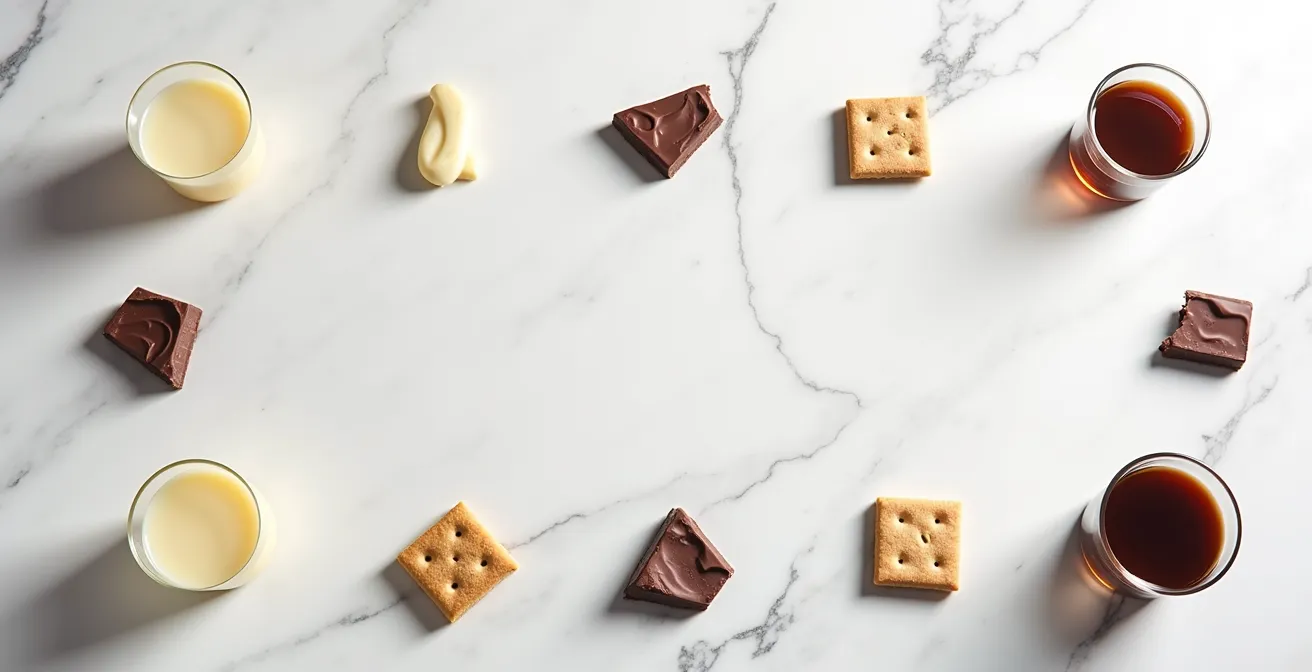
As the tasting setup above suggests, a structured approach is key. To avoid overload, focus on a systematic process for cleansing your palate. This ensures each new sample is judged on its own merits. Here’s a simple but effective strategy used by experts:
- Optimal Temperature: First, ensure the chocolate is at room temperature (around 70-72°F). Cold chocolate mutes flavors.
- Palate Cleanser: Between each sample, eat a small piece of a neutral water cracker. Its job is to absorb residual fats and flavors from your tongue.
- Water Rinse: Follow the cracker with a sip of room-temperature water. Swirl it around your mouth to fully reset your taste receptors.
- Document Impressions: Use a small notebook or your phone to jot down initial aroma and flavor notes for each sample *before* moving to the next. This prevents later tastes from influencing your memory of earlier ones.
Boutique vs. Supermarket: What Service Do You Really Pay For?
Walking into a specialty chocolate boutique can feel worlds away from grabbing a bar in the supermarket aisle. The difference isn’t just the price tag; it’s the entire ecosystem of service, knowledge, and quality control you are paying for. While supermarkets offer convenience and accessibility, boutiques provide curation and expertise—an invaluable service for anyone serious about exploring the world of craft chocolate. This distinction is clear in market data, which shows supermarkets command the largest revenue share, but online and specialty channels are growing fast among discerning consumers.
The primary service you get at a boutique is access to a “chocolate sommelier”—a staff member with deep product knowledge. They can tell you the story behind each bar, from the bean’s origin and varietal to the maker’s specific roasting profile. This is a level of transparency impossible to find in a mass-market environment. Furthermore, boutiques maintain a strict cold chain, ensuring the chocolate is stored at optimal temperatures to preserve its delicate temper and flavor, a factor often overlooked in supermarket logistics. This focus on quality is what attracts health-conscious consumers and flavor-seekers alike.
The table below, based on industry analysis including a recent report from Grandview Research, breaks down the key differences in what you’re really paying for.
| Aspect | Premium Boutique | Mass Market |
|---|---|---|
| Market Share 2024 | 35.8% (Assortments segment) | 64.2% |
| Distribution Channel Growth | Online: 7.4% CAGR (2025-2030) | Supermarkets: 35.9% revenue share |
| Consumer Focus | Quality, ethical sourcing, craftsmanship | Convenience, price, availability |
| Temperature Control | Strict cold chain maintenance | Variable storage conditions |
| Product Knowledge | Specialized chocolate sommeliers | General retail staff |
The ‘Belgian Chocolate’ Trap: Avoiding Mass-Produced Tourist Souvenirs
The term “Belgian Chocolate” evokes images of old-world quality and luxurious taste. While Belgium has a rich history of producing fine pralines and confections, the label itself has become a marketing tool that can often mislead consumers. The “trap” is assuming that a “Made in Belgium” sticker guarantees superior, craft-quality chocolate. In reality, many of these products are made by chocolatiers, not bean-to-bar makers. Chocolatiers typically work with pre-made chocolate “couverture,” which they melt, flavor, and shape. While this requires skill, it is fundamentally different from the craft of making chocolate from the raw cacao bean.
True bean-to-bar makers are artisans who control the entire process, from sourcing and roasting the beans to grinding, conching, and tempering the final bar. This complete control allows them to bring out the unique flavor profiles of a specific harvest from a specific region. This craft approach is rare; it’s estimated that fine-flavor cacao beans represent just 10% of global production, making them a prized ingredient for makers focused on quality over quantity. To avoid the tourist trap, you must learn to look for the signs of true bean-to-bar craftsmanship, which prioritize transparency over vague geographical branding.
The next time you’re browsing for chocolate, whether at home or abroad, use the following checklist to determine if you’re looking at a genuine craft product or a repackaged mass-market bar.
Your Checklist: How to Identify Authentic Bean-to-Bar Chocolate
- Check for Specific Origin Information: Authentic makers list exact farms, cooperatives, or regions (e.g., “Piura, Peru”), not just countries (“Made in Peru”).
- Look for Bean Variety Details: Fine chocolate makers often specify the cacao cultivar, such as Trinitario, Criollo, or a specific heirloom variety.
- Verify the Maker vs. Chocolatier Distinction: The packaging should make it clear that the company processes from raw beans, not from pre-made couverture. Look for phrases like “bean-to-bar” or “cacao roaster.”
- Examine Supply Chain Transparency: Legitimate craft makers often share their direct trade relationships and farmer partnerships on their packaging or website.
- Look for Harvest Year or Batch Information: Just like wine, artisanal makers often include production dates, harvest years, or batch numbers, signifying a small-scale, carefully monitored process.
When is the Best Time of Year to Visit Cacao Plantations?
For the ultimate bean-to-bar experience, nothing beats visiting a cacao plantation. Seeing the colorful pods growing on trees, witnessing the fermentation and drying processes, and speaking with the farmers who cultivate the beans provides an unparalleled connection to the chocolate you eat. However, planning such a trip requires careful timing. The goal is to arrive during the main harvest season, when the farms are buzzing with activity and you can see the post-harvest processing in action.
Cacao is a tropical crop grown in a narrow band around the equator, often called the “Cacao Belt.” While many countries grow cacao, the harvest seasons vary significantly by region. Most regions have a main harvest, which yields the bulk of the crop, and a smaller secondary harvest. Visiting during the main harvest ensures you’ll see the pods being cut from the trees, split open to reveal the pulp-covered beans, and laid out for fermentation and drying—the critical steps that develop the precursors to chocolate’s complex flavors.
To plan your trip effectively, you need to align your travel dates with the agricultural calendar of your destination. The following table provides a general guide to the main harvest seasons in major cacao-producing regions, helping you decide the best time for your origin trip.
| Region | Main Harvest | Secondary Harvest | Best Visit Period |
|---|---|---|---|
| West Africa (Ghana, Ivory Coast) | October – March | May – August | November – February |
| Ecuador | March – June | October – January | April – May |
| Vietnam | November – February | April – June | December – January |
| Brazil | October – March | June – September | November – December |
How to Use the ‘Snap, Melt, Breathe’ Technique for Proper Analysis?
Tasting chocolate like an expert goes far beyond simply deciding if you “like” it. It’s a form of sensory analysis that engages sight, sound, touch, and smell. The “Snap, Melt, Breathe” technique is a simple yet powerful framework for deconstructing a chocolate bar and understanding its quality and flavor profile. This methodical approach allows you to appreciate the craftsmanship behind the bar, from its temper to its aromatic complexity. It turns passive consumption into an active, mindful tasting session.
The first step is the Snap. Break off a piece of the chocolate. A well-tempered bar will break with a clean, sharp snap. This sound indicates a stable crystalline structure in the cocoa butter, which is crucial for a smooth texture and glossy appearance. A dull, soft break suggests poor tempering or improper storage. This crystalline structure is the hallmark of a skilled maker’s control over their process.
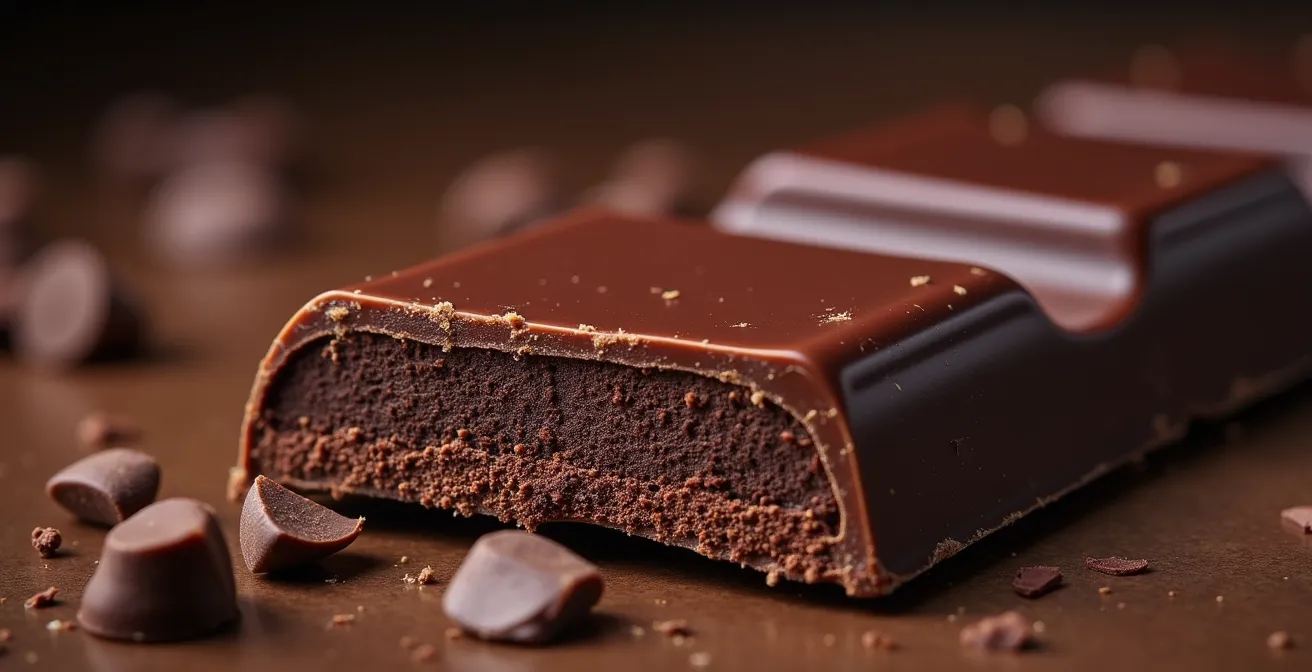
Next comes the Melt. Place the small piece of chocolate on your tongue and resist the urge to chew. Let it slowly melt. High-quality chocolate, rich in cocoa butter, will melt smoothly and luxuriously at body temperature. A waxy or gritty texture might indicate the use of other vegetable fats or poor grinding. As it melts, the chocolate coats your palate, releasing its primary flavors. The final step is to Breathe. As the chocolate melts, inhale gently through your mouth and exhale through your nose. This technique, known as retronasal olfaction, carries volatile aromatic compounds from your mouth to your nasal passages, unlocking a huge range of secondary flavors and aromas—from fruity and floral to nutty and earthy. This sensory process is so powerful that a scientific study on sensory evaluation used physiological responses like heart rate and facial expressions to measure how different chocolate tastes are perceived.
How to Run a ‘Blind Taste Test’ on Yourself to Remove Bias?
Our perception of taste is heavily influenced by external factors: packaging, price, brand reputation, and even our own expectations. A bar you know is expensive and from a famous maker might “taste” better simply because you expect it to. A blind taste test is the ultimate tool for stripping away these biases and discovering your true palate preferences. By tasting without preconceived notions, you can focus purely on the sensory characteristics of the chocolate itself.
Setting up a blind test at home is simple and highly educational. The key is to standardize every variable except the chocolate itself. This means using identical piece sizes, serving them at the same temperature, and ensuring you don’t know which is which until the very end. This process forces you to rely on your senses alone. As The Chocolate Professor notes in a guide to tasting, vocabulary is essential for objectivity:
All sensory tasting is somewhat subjective. Just having the right vocabulary can help with the tasting. This is where flavor wheels come in.
– The Chocolate Professor, Chocolate Tasting Guide
To run your own objective test, follow this protocol. It will help you remove bias and build a reliable “flavor memory” of what you genuinely enjoy.
- Prepare Samples: Ensure all chocolate samples are at room temperature (70-72°F) for consistent melting.
- Control for Size: Cut identical piece sizes to avoid quantity bias.
- Anonymize: Have a friend or partner label the samples with letters (A, B, C) and keep the key hidden from you.
- Cleanse Your Palate: Use water and neutral crackers between each sample to reset your taste buds.
- Use a Flavor Wheel: Refer to a standardized chocolate flavor wheel to help you identify and record specific notes (e.g., “raisin,” “coffee,” “walnut”) instead of vague terms like “good.”
- Document All Senses: Note the appearance, the sound of the snap, the aroma, the texture as it melts, and finally, the taste and aftertaste.
- Reveal and Compare: Only after you have finished tasting and documenting all samples should you look at the key. Compare your notes to see which chocolates you truly preferred without the influence of branding.
Key Takeaways
- Price Reflects Craft: A high price tag on a craft chocolate bar often signifies ethical sourcing, high-quality beans, and a transparent value chain, not just a luxury markup.
- Authenticity Is in the Details: True bean-to-bar chocolate is identified by specific origin information (farm, region) and bean varietals, not generic country labels.
- Tasting Is a Learned Skill: To truly appreciate fine chocolate, you must move beyond passive eating and actively analyze its snap, melt, aroma, and flavor notes using a structured technique.
Single Origin vs. Blend: Which Bean Profile Fits Your Palate Best?
As you delve deeper into the world of craft chocolate, you’ll encounter two main categories: single origin and blend. Understanding the difference is key to identifying your personal taste profile and selecting bars you’ll truly love. Neither is inherently better; they simply offer different philosophies and flavor experiences. Your preference will depend on whether you seek the wild, distinct notes of a specific terroir or the balanced harmony of a carefully constructed recipe.
A single-origin bar is made with cacao beans from one specific country, region, or even a single farm (a “single estate”). The goal of the maker is to showcase the “terroir”—the unique set of flavors imparted by the soil, climate, and environment of that particular place. A single-origin bar from Madagascar might have bright, red fruit notes, while one from Ecuador could be floral and nutty. These bars offer a snapshot of a place and can be wildly complex, exciting, and sometimes challenging. They are for the adventurous taster who wants to explore the diverse spectrum of cacao flavor.
A blend, on the other hand, is created by combining beans from multiple origins. Here, the maker’s goal is not to highlight a single terroir, but to create a specific, consistent, and balanced flavor profile. By blending beans, a maker can smooth out the sharp edges of one origin, add a robust chocolatey base from another, and introduce a hint of fruit or spice from a third. This approach appeals to consumers who are looking for a more harmonious and often familiar chocolate experience. As some market analysis shows, many consumers seek variety and a comprehensive tasting experience, which can be delivered effectively through well-crafted assortments and blends.
Now that you are armed with this knowledge, you can approach your search for a chocolate workshop not as a tourist, but as a budding connoisseur. Use this framework on your next trip or even at your local specialty store to discover the rich, authentic world of craft chocolate with the confidence of an expert.