
The heart health benefits of cocoa are dictated not just by flavanols, but by the structural and nutritional integrity of its non-fat solid matrix.
- The non-fat solids provide essential dietary fiber and minerals that influence both health outcomes and cocoa’s physical behavior in recipes.
- Processing methods like “Dutching” destroy the very flavanols responsible for blood pressure reduction, making natural cocoa the superior choice for health benefits.
Recommendation: For tangible health benefits, prioritize high-flavanol, natural (non-alkalized) cocoa powder, paying close attention to both the dose and the processing method, not just the percentage on the label.
For years, health-conscious individuals have been told that dark chocolate is a heart-healthy indulgence. The conversation typically credits a class of antioxidants called flavanols for these benefits, particularly their ability to improve blood flow and lower blood pressure. This has led to a simplified mantra: the higher the cocoa percentage, the better. While not entirely wrong, this view misses the most critical part of the story. It overlooks the foundational component where these benefits originate and can be lost: the non-fat cocoa solid.
As a nutritionist analyzing superfoods, it’s clear the focus on flavanols alone is incomplete. The real key to understanding cocoa’s impact on cardiovascular health lies in its non-fat matrix—the complex blend of fiber, minerals, and proteins that acts as a bioactive scaffold. This solid structure is not just a passive carrier for flavanols; its own properties dictate everything from nutrient absorption and digestive health to the very survival of those precious flavanols during processing. It even governs how cocoa powder behaves in your kitchen, a direct reflection of its underlying chemical makeup.
This article moves beyond the headlines to provide a deeper analysis. We will deconstruct the non-fat cocoa solid to reveal its profound and often surprising influence. We will explore how its fiber content contributes to health, why its chemical pH is a critical factor in both nutrition and baking, and how its interaction with processing can either preserve or completely nullify its sought-after health effects. By understanding the science of the solid, you can make truly informed choices to harness the full power of cocoa for your health.
To navigate this deep dive into the science of cocoa, the following sections will break down each critical aspect of its non-fat components, from their surprising nutritional profile to their practical implications in your diet and kitchen.
Contents: The Science Behind Cocoa Solids and Your Health
- Why Is 100% Cocoa a Surprisingly Good Source of Dietary Fiber?
- How to Adjust Liquid Ratios When Using High-Solid Cocoa Powder?
- Natural vs. Dutch-Processed: Which Powder Has More Antioxidants?
- The Cadmium Risk in Specific Cocoa Origins You Should Know About
- What is the Minimum Daily Dose of Cocoa for Cognitive Benefits?
- Why Are Flavanols Destroyed by Dutch Processing?
- 10/12 vs. 22/24 Fat: Which Powder Makes Moister Cakes?
- Natural vs. Dutch Process: When Does Swapping Cocoa Powder Break a Recipe?
Why Is 100% Cocoa a Surprisingly Good Source of Dietary Fiber?
When considering the nutritional benefits of cocoa, the focus is almost exclusively on its antioxidant content. However, the non-fat solid portion of the cocoa bean is a significant source of a nutrient vital for cardiovascular and digestive health: dietary fiber. Pure, unsweetened cocoa powder contains a remarkable 33 grams of fiber per 100 grams. This high fiber content is what makes up the bulk of its carbohydrate profile, rendering it a low-glycemic ingredient that supports stable blood sugar levels.
This fibrous matrix is composed of both soluble and insoluble fibers, which contribute to a healthy gut microbiome, improve digestion, and help prevent constipation. In the context of cardiovascular health, dietary fiber plays a well-established role in lowering cholesterol levels and supporting overall heart function. The fiber in cocoa powder is not just a passive bulking agent; it is a structurally active component. In baking, it acts as a ‘structural sponge,’ absorbing water and contributing to the final texture and crumb of a product.
Therefore, when you consume high-quality, 100% cocoa, you are not only ingesting polyphenols but also a substantial dose of prebiotic fiber. This synergy, where flavanols and fiber work together, is a key reason why whole-food sources of nutrients are often more effective than isolated supplements. The non-fat solid matrix provides a more complete nutritional package than is commonly acknowledged.
How to Adjust Liquid Ratios When Using High-Solid Cocoa Powder?
The powerful, fibrous structure of non-fat cocoa solids has a direct and tangible impact in the kitchen. Cocoa powder is intensely hygroscopic, meaning it readily attracts and holds onto water molecules. This is because, in its dry form, professional analysis reveals that cocoa powder consists of only about 3.2% water. The vast network of fiber and dry solids is eager to absorb moisture from its environment, a characteristic that is fundamental to its role in baking but can easily break a recipe if not properly managed.
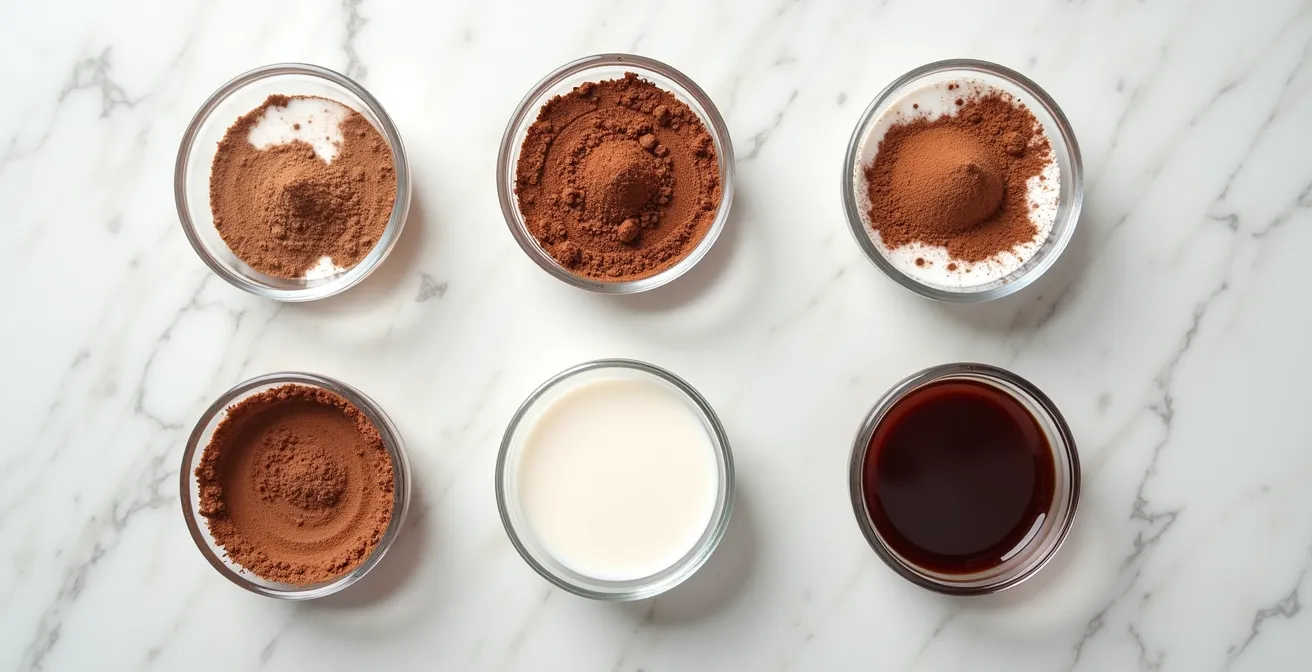
As the image above illustrates, cocoa’s interaction with liquid transforms its texture and properties. When substituting high-solid cocoa powder for other forms of chocolate, such as melted chocolate (which contains significant fat and less dry matter), this absorbency must be accounted for. Professional bakers have found that recipes require approximately 15-20% more liquid when using cocoa powder. This extra liquid is absorbed by the non-fat solids, ensuring the final product is moist rather than dry and crumbly. Failing to make this adjustment is a common reason why brownies or cakes made with cocoa powder turn out dense and chalky.
This physical behavior is a direct manifestation of cocoa’s nutritional composition. The same fiber that supports digestive health is what demands proper hydration in a recipe. Understanding this principle allows for better control over texture, ensuring the culinary result is as rewarding as the nutritional one.
Natural vs. Dutch-Processed: Which Powder Has More Antioxidants?
Not all cocoa powders are created equal, especially when it comes to their primary health-promoting compounds: flavanols. The critical difference lies in a common processing step known as alkalization, or “Dutching.” This process involves washing cocoa beans in an alkaline solution to neutralize their natural acidity. While it results in a darker color and a milder, less bitter flavor, crucial research demonstrates that alkalizing (Dutching) devastates epicatechins, a key flavanol for blood pressure regulation and endothelial function.
Natural cocoa powder, which has not undergone alkalization, retains a much higher concentration of these beneficial polyphenols. For those seeking the cardiovascular benefits, choosing natural cocoa is non-negotiable. The European Food Safety Authority (EFSA) has acknowledged the health claim associated with cocoa flavanols, providing a specific dosage for its effects. As the EFSA’s panel on dietetic products states:
to consume 200 mg of cocoa flavanols per day, provided by 2.5 g of high-flavanol cocoa powder or 10 g of high-flavanol dark chocolate, in the context of a balanced diet
– European Food Safety Authority (EFSA), EFSA Health Claim on Cocoa Flavanols
Achieving this 200 mg dose is significantly more challenging with Dutch-processed cocoa due to its depleted flavanol content. The choice between natural and Dutched cocoa is therefore a choice between a potent superfood and a mere flavoring agent. The following table breaks down the fundamental differences:
| Processing Method | Flavanol Retention | pH Level | Flavor Profile |
|---|---|---|---|
| Natural Cocoa | High (preserved) | 5.3-5.8 (acidic) | Sharp, fruity, complex |
| Light Dutch Process | Moderate (partially reduced) | 6.8-7.2 (neutral) | Mild, smooth |
| Heavy Dutch Process | Low (mostly destroyed) | 7.8-8.4 (alkaline) | Very mild, dark color |
The Cadmium Risk in Specific Cocoa Origins You Should Know About
While the non-fat solids of cocoa are a treasure trove of beneficial compounds, they can also present a potential health risk: the accumulation of heavy metals, specifically cadmium. This issue is not uniform across all cocoa but is closely linked to the geography and geology of where it is grown. The cacao plant is particularly efficient at absorbing cadmium from the soil, a problem exacerbated in regions with volcanic soil, such as parts of South America.
Crucially, this cadmium concentrates in the non-fat solids of the cocoa bean. This creates a nutritional paradox: the very component valued for its fiber and flavonoid content is also the component that harbors this potential contaminant. Analysis has shown elevated cadmium levels due to the cacao plant’s efficient uptake mechanism in these specific regions. Long-term exposure to high levels of cadmium can have adverse effects on kidney function and bone health.
For a health-conscious consumer, this does not mean avoiding cocoa altogether. Rather, it calls for a strategy of risk mitigation. This includes:
- Rotating cocoa origins: Avoid consuming cocoa from a single source, particularly from known high-cadmium regions, on a continuous basis.
- Seeking tested brands: Look for companies that perform third-party testing for heavy metals and make their results transparent to consumers.
- Moderation: As with any food, consuming cocoa as part of a varied and balanced diet helps minimize potential risks from any single source.
This nuanced understanding reinforces the importance of looking beyond simple marketing claims and scrutinizing the entire supply chain of the foods we consume for health.
What is the Minimum Daily Dose of Cocoa for Cognitive Benefits?
Beyond cardiovascular health, the flavanols concentrated in cocoa’s non-fat solids have demonstrated significant benefits for cognitive function. These compounds are believed to work by increasing cerebral blood flow and promoting neurogenesis, the formation of new neurons. This has led to extensive research to determine the effective dosage needed to achieve these cognitive enhancements, particularly in an aging population concerned with memory preservation.
The landmark COcoa Supplement and Multivitamin Outcomes Study (COSMOS) provided critical insights into this question. This large-scale, randomized trial was designed to rigorously test the long-term health effects of daily cocoa flavanol supplementation. The findings from this trial, and others like it, have helped establish a scientifically-backed dosage for cognitive support. The landmark COSMOS trial investigated whether 500 mg/day cocoa flavanols, taken as a supplement, could reduce the risk of developing cardiovascular disease and cancer.

While the primary endpoints were focused on heart disease and cancer, sub-studies of COSMOS have shown promising results for cognitive function at this 500 mg/day dosage. To put this in perspective, achieving this dose requires a conscious effort. It translates to roughly two tablespoons of high-flavanol natural cocoa powder or a significant portion of specially formulated high-flavanol dark chocolate. It is a therapeutic dose that is unlikely to be reached through casual consumption, highlighting the need for intentional dietary choices if cognitive benefits are the primary goal.
Why Are Flavanols Destroyed by Dutch Processing?
The destruction of flavanols during Dutch processing is a simple matter of chemistry with profound health consequences. Flavanols are a type of polyphenol that is sensitive to changes in pH. Natural cocoa solids are acidic, with a pH typically between 5.3 and 5.8. The process of “Dutching” involves washing them with an alkaline solution (a substance with a high pH). This chemical reaction neutralizes the acid, but in doing so, it structurally alters and degrades the flavanol molecules, rendering them biologically inactive.
The impact of this degradation is significant. A comprehensive meta-analysis of multiple studies confirmed the direct effect of flavanol-rich cocoa on blood pressure. The research revealed a modest but clinically significant 1.76 mmHg reduction in both systolic and diastolic blood pressure in participants who consumed flavanol-rich cocoa products. This effect is attributed to the flavanols’ ability to improve endothelial function—the health of the inner lining of our blood vessels—by increasing the production of nitric oxide, a molecule that helps dilate blood vessels and improve blood flow.
While a drop of 1.76 mmHg may seem small, its importance is put into perspective by leading researchers. As experts in the field have noted, even minor reductions can have a major cumulative impact on long-term health.
Every 10 mmHg reduction in SBP significantly reduces the risk of major cardiovascular events, CHD, stroke, and heart failure, which leads to a significant 13% reduction in all-cause mortality
– Frontiers in Nutrition researchers, Cocoa, Blood Pressure, and Vascular Function study
When you choose Dutch-processed cocoa, you are choosing a product where the very compounds responsible for this beneficial mechanism have been largely eliminated for the sake of a milder taste.
Key Takeaways
- The health benefits of cocoa reside in the non-fat solid matrix, which includes fiber and minerals alongside flavanols.
- Natural (non-alkalized) cocoa is nutritionally superior as the “Dutching” process destroys the flavanols responsible for blood pressure and cognitive benefits.
- For tangible health effects, a specific daily dose of flavanols is required (e.g., 200-500 mg), which necessitates using high-flavanol powder intentionally.
10/12 vs. 22/24 Fat: Which Powder Makes Moister Cakes?
Within the world of cocoa powder, another key distinction is the fat content, often expressed as 10/12 or 22/24. These numbers refer to the percentage of residual cocoa butter left in the powder after pressing. A 10/12 powder is lower in fat, while a 22/24 powder is considered high-fat. A common misconception is that a higher fat content automatically leads to a moister cake. While fat contributes to a sensation of richness and a smooth mouthfeel, the true source of moisture in a baked good is proper hydration.
As we’ve established, the non-fat cocoa solids are highly hygroscopic due to their fiber content. Professional pastry tests using high-fat Valrhona cocoa powder (which contains around 22g of fat per 100g) have demonstrated this principle. While the high fat content provides a desirable, fudgy texture by coating flour proteins and inhibiting gluten development, the perception of moisture ultimately comes from ensuring the 27g of dietary fiber per 100g in the powder is fully hydrated. A cake made with high-fat powder but insufficient liquid will still be dry.
The choice between fat levels, therefore, depends on the desired final structure of the baked good. Fat creates tenderness and a “short” crumb, while the hydrated non-fat solids provide the bulk and true moisture. Balancing the perception of richness from fat with the actual moisture from hydrated fiber is the key to mastering cocoa-based baking.
Action Plan: Selecting Cocoa Fat Content by Application
- For brownies and fudgy textures: Use 22/24 high-fat powder, as the fat inhibits gluten formation, creating a dense, rich result.
- For structured items like cocoa bread or angel food cake: Choose 10/12 low-fat powder to allow for stronger gluten development and a more robust structure.
- Adjust liquid for low-fat powder: When using a 10/12 powder in a recipe calling for a higher fat version, add approximately 2 tablespoons of extra liquid per cup of powder to compensate for the lower fat content.
- For a tender crumb in cakes: A 22/24 powder is ideal as the fat coats flour proteins, preventing them from forming tough gluten strands and resulting in a more tender texture.
- Balance perception and reality: Remember that mouthfeel (from fat) and moisture (from hydrated fiber) are distinct. Combine the appropriate fat level for your desired texture with sufficient liquid for genuine moisture.
Natural vs. Dutch Process: When Does Swapping Cocoa Powder Break a Recipe?
Swapping natural cocoa powder for Dutch-processed (or vice-versa) is one of the most common ways to ruin a perfectly good recipe. The problem goes beyond flavor and color; it’s a fundamental issue of chemistry. As discussed, natural cocoa is acidic, while Dutch-processed cocoa is neutral or alkaline. This difference in pH is critical for recipes that rely on chemical leaveners like baking soda and baking powder.
Baking soda (sodium bicarbonate) is a base. It requires an acid to react with to produce the carbon dioxide gas that makes baked goods rise. In many recipes, natural cocoa powder provides that necessary acid. If you swap in neutral Dutch-processed cocoa, the baking soda has nothing to react with, and your cake will be flat, dense, and may have a soapy or metallic aftertaste. Conversely, baking powder is a complete leavening system containing both an acid and a base. It does not require an external acid to work. Using it with acidic natural cocoa can sometimes create too much lift or affect the flavor.
Successfully swapping between cocoa types requires adjusting the leavening agents to re-balance the recipe’s chemistry. This is not guesswork; it requires precise adjustments. However, it’s important to remember the health implications of this swap. While you can fix the chemistry, you cannot add back the flavanols destroyed by the Dutching process. Furthermore, it’s a crucial final nuance that the blood pressure benefits themselves have a condition. As leading researchers at the University of Surrey found:
cocoa flavanols only decrease blood pressure if it is elevated
– University of Surrey researchers, First real-life study of cocoa and blood pressure
This underscores that cocoa is not a panacea but a targeted tool for those with existing hypertension. The table below provides a guide for making chemical adjustments, but the nutritional trade-off should always be considered.
| Original Recipe | Swap Direction | Required Adjustment |
|---|---|---|
| Natural + Baking Soda | To Dutch Process | Replace soda with 2x baking powder |
| Dutch + Baking Powder | To Natural | Add 1/8 tsp baking soda per cup flour |
| Natural + Both Leaveners | To Dutch | Reduce soda by half, increase powder |
| Dutch + No Leavener | To Natural | Safe swap, adjust for stronger flavor |
Ultimately, harnessing the potent cardiovascular and cognitive benefits of cocoa requires a shift in perspective. It demands that we look past the simple percentage on a label and instead evaluate the product based on the integrity of its non-fat solid matrix. By choosing natural, high-flavanol powder and understanding how its scientific properties translate to both health and cooking, you can unlock the true potential of this ancient superfood. Apply this knowledge to your selection process to make every spoonful a meaningful contribution to your well-being.