
Avoiding dairy is only the first step to unlocking chocolate’s health benefits; true optimization lies in understanding and controlling its entire biochemical journey from bean to bar.
- Alkaline “Dutch” processing can destroy over 89% of cocoa’s beneficial flavanols before the chocolate is even made.
- The stimulant theobromine has a long 7-12 hour half-life, meaning an evening chocolate snack can significantly disrupt deep sleep cycles.
Recommendation: For maximum benefit, choose non-alkalized, high-cacao chocolate, pair it with Vitamin C-rich foods to boost iron uptake, and consume it at least 4-6 hours before bed.
The conversation around dark chocolate and health often begins and ends with a single question: does milk inhibit the absorption of its vaunted antioxidants? The short answer is yes, the casein protein in dairy milk binds to cocoa’s polyphenols, specifically flavanols, rendering them less bioavailable to the body. This is why a splash of milk in your hot cocoa or choosing milk chocolate over dark effectively negates many of the cardiovascular benefits you seek. For the dedicated health optimizer, however, this fact is merely the entry point to a much deeper and more impactful series of questions.
True optimization of cocoa’s potent health properties requires a more sophisticated, biochemical approach. The real determinants of benefit are not just what you add to your chocolate, but the integrity of the chocolate itself and how you integrate it into your broader nutritional strategy. Factors like processing methods, the type of sweetener used, the time of day you consume it, and the foods you pair it with can dramatically alter its impact on your body. The difference between a healthy indulgence and a block of empty calories lies in understanding these nuances.
This guide moves beyond the simple “no dairy” rule. We will dissect the entire biochemical chain, from the destruction of flavanols during “Dutch processing” to the strategic timing required to prevent sleep disruption from theobromine. We will explore how to identify truly healthy chocolate, which sweeteners complement its profile, and what synergistic food pairings can amplify nutrient absorption, transforming your chocolate consumption from a guilty pleasure into a precise tool for health optimization.
This article provides a comprehensive framework for understanding these critical factors. Below is a summary of the key areas we will explore to help you unlock the full potential of cocoa.
Summary: A Biochemical Guide to Optimizing Cocoa Benefits
- Why Are Flavanols Destroyed by Dutch Processing?
- How to Spot Hidden Sugars in ‘Healthy’ Dark Chocolate Bars?
- Stevia vs. Coconut Sugar: Which Pairs Best with Dark Chocolate for Health?
- The Mistake of Eating Chocolate Before Bed That Disrupts Deep Sleep
- What Foods to Eat with Chocolate to Boost Iron Absorption?
- Why Is 100% Cocoa a Surprisingly Good Source of Dietary Fiber?
- 10/12 vs. 22/24 Fat: Which Powder Makes Moister Cakes?
- How to Fit Dark Chocolate into a Balanced Meal Plan Without Guilt?
Why Are Flavanols Destroyed by Dutch Processing?
The most significant loss of antioxidants often occurs long before milk is ever considered. The culprit is a common industrial method known as “Dutch processing” or “alkalizing.” This process involves washing cocoa beans in an alkaline solution, such as potassium carbonate, to neutralize their natural acidity. From a culinary perspective, this yields a darker, less bitter, and more mellow-flavored cocoa powder that dissolves more easily in liquids. From a biochemical standpoint, however, it is a catastrophe for flavanol content.
The alkaline solution triggers a chemical reaction that fundamentally alters the molecular structure of polyphenols. Key flavanols like epicatechin and catechin, which are responsible for many of cocoa’s health benefits, are highly sensitive to changes in pH. The alkalization process degrades them, and this loss is not trivial. Detailed research reveals an 89% reduction in total flavanol content in heavily Dutch-processed powders compared to their natural counterparts. Some studies show losses of specific compounds can be even more extreme, with up to 98% of epicatechin being destroyed.
This means that choosing a chocolate bar or cocoa powder labeled “processed with alkali” or “Dutch-processed” is an even greater error than adding dairy. You are starting with a product that has been preemptively stripped of the very compounds you are trying to preserve. To ensure you are receiving any meaningful antioxidant benefit, the first and most critical step is to select products made with natural, non-alkalized cocoa. The slightly more bitter or fruity notes of natural cocoa are the taste of its retained nutritional power.
How to Spot Hidden Sugars in ‘Healthy’ Dark Chocolate Bars?
Once you’ve ensured your chocolate is made from non-alkalized cocoa, the next hurdle is sugar. The term “dark chocolate” is not regulated, and a bar can be labeled as such while still containing a high amount of sugar, effectively turning a superfood into candy. For a health optimizer, learning to read an ingredient list with a biochemist’s eye is crucial to separate the truly beneficial from the merely masquerading.
The first indicator of quality is the order of ingredients. In a high-quality dark chocolate, the first ingredient should always be a form of cocoa itself, such as cocoa beans, cocoa mass, or cacao. If sugar or any other sweetener is listed first, it means it is the most predominant ingredient by weight, and the bar is not a health product. Secondly, look for a high cacao percentage, ideally 70% or more. This percentage directly correlates with higher flavanol content and a lower proportion of sugar.
Beyond the obvious, watch for an array of “hidden” sugars disguised under different names like glucose syrup, agave nectar, or fruit juice concentrate. A useful metric for health optimizers is the sugar-to-fiber ratio. A bar with a ratio close to 1:1 or lower indicates a more balanced and beneficial product. By focusing on these key markers, you can confidently select a chocolate that delivers on its health promise without an unwanted glycemic load. A final check for health-conscious consumers involves being aware of potential contaminants; some reports have noted that heavy metals like cadmium and lead were found in certain dark chocolates, so choosing reputable brands that test for these is wise.
Stevia vs. Coconut Sugar: Which Pairs Best with Dark Chocolate for Health?
Once you’ve selected a high-cacao, non-alkalized chocolate, the choice of sweetener becomes the next critical variable in the health equation, especially if you’re making your own chocolate treats or choosing a sweetened bar. The goal is to achieve palatability without triggering a significant insulin response or adding empty calories. The two most popular “healthy” alternatives, stevia and coconut sugar, offer vastly different metabolic profiles when paired with dark chocolate.
Stevia is a non-nutritive, zero-calorie sweetener derived from the leaves of the *Stevia rebaudiana* plant. Its key advantage is that it does not impact blood glucose or insulin levels, making it an ideal choice for maintaining glycemic control. From a purely metabolic standpoint, it is the superior partner for dark chocolate, as it adds sweetness without any associated caloric or hormonal cost. Its main drawback is flavor; some people detect a slightly bitter or licorice-like aftertaste that can clash with the complex notes of high-quality cocoa.
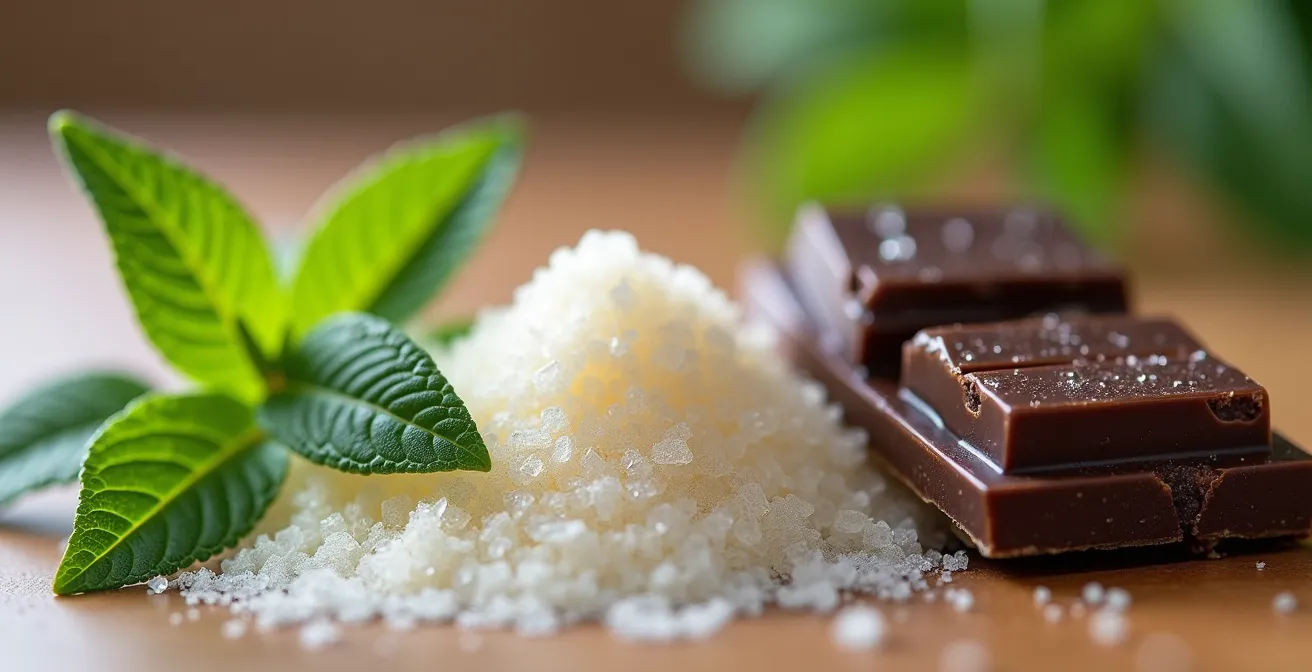
Coconut sugar, on the other hand, is a nutritive sweetener. It does contain calories and fructose, and it will impact blood sugar, though it has a lower glycemic index than regular table sugar. Its main appeal lies in its rich, caramel-like flavor, which complements dark chocolate beautifully. It also contains trace amounts of minerals like iron and zinc. For a health optimizer, coconut sugar should be treated like a “better” sugar, not a “free” food. It is preferable to refined white sugar but remains a source of sucrose. Therefore, for strict blood sugar management and zero caloric impact, stevia is the clear winner. For a more traditional flavor profile with a modest nutritional upgrade, coconut sugar can be used in moderation.
The Mistake of Eating Chocolate Before Bed That Disrupts Deep Sleep
A common mistake even among health-conscious individuals is consuming dark chocolate as an evening treat. While it may seem like a harmless indulgence, its biochemical properties can significantly interfere with sleep architecture, particularly the restorative deep sleep phase. The primary culprit is not just caffeine, but its often-overlooked and more potent sibling: theobromine.
Both caffeine and theobromine are methylxanthine stimulants that block adenosine receptors in the brain, preventing the onset of drowsiness. However, their metabolic timelines differ dramatically. While caffeine has a half-life of roughly 3-5 hours, research on stimulants shows that theobromine has a half-life of approximately 7-12 hours. This means that if you consume a square of dark chocolate at 8 PM, a substantial amount of this stimulant is still circulating in your system when you go to bed and well into the early morning hours. This persistent stimulation can reduce sleep efficiency, increase nighttime awakenings, and shorten the duration of deep sleep, leaving you feeling unrefreshed the next day.
The concentration of these stimulants increases with the cocoa percentage. An 85% or 90% dark chocolate bar contains significantly more theobromine than a 70% bar. For a health optimizer who values sleep as a cornerstone of recovery and well-being, timing chocolate consumption is critical. It should be treated as a daytime food, ideally consumed no later than early afternoon.
Your Action Plan: Calculating Your Personal Chocolate Cut-Off Time
- Set a Baseline: Consume dark chocolate at least four to six hours before your typical bedtime to allow sufficient time to metabolize both theobromine and caffeine.
- Check the Cocoa Percentage: Be aware that higher percentages, like 85% or more, contain significantly higher levels of theobromine and will require a longer metabolic window.
- Consider Your Genetics: Your sensitivity is influenced by your CYP1A2 gene, which determines whether you are a fast or slow caffeine metabolizer. Slow metabolizers should be even more cautious.
- Track Your Sleep: Use a sleep monitoring app or wearable to objectively measure your deep sleep duration on nights with and without evening chocolate consumption to see the direct impact.
- Start with Smaller Portions: If you are sensitive to stimulants, begin with smaller portions (10-20g) and consume them earlier in the day to assess your tolerance.
What Foods to Eat with Chocolate to Boost Iron Absorption?
Beyond antioxidants, dark chocolate is a surprisingly potent source of essential minerals, most notably iron. A 100-gram bar of 70-85% dark chocolate can provide a significant portion of the recommended daily intake. However, the iron found in plant-based foods, including chocolate, is non-heme iron. This form is less bioavailable than the heme iron found in animal products, meaning your body has a harder time absorbing it. Fortunately, you can dramatically increase its uptake through strategic food pairings.
The most powerful enhancer of non-heme iron absorption is Vitamin C. It works by forming a soluble complex with the iron in the acidic environment of the stomach, making it much easier for the intestines to absorb. According to research on nutrient bioavailability, dark chocolate provides 25% of the RDA for iron per 100 kcal, and pairing it with Vitamin C-rich foods is key. Simple, practical pairings include having a square of dark chocolate with a handful of strawberries, a slice of orange, or even alongside bell peppers.
Conversely, certain compounds act as potent inhibitors of iron absorption. Tannins (found in tea and coffee), phytates (found in whole grains, nuts, and legumes), and calcium (from dairy) all bind to non-heme iron and block its absorption. Therefore, having your dark chocolate with a cup of tea, as part of a whole-grain granola bar, or with a glass of milk is counterproductive if your goal is to maximize iron uptake. For optimal mineral benefit, consume your chocolate separately from these inhibitors and alongside a source of Vitamin C.
This table summarizes the key foods that either help or hinder your body’s ability to absorb the valuable iron found in dark chocolate.
| Enhancers | Effect | Inhibitors | Effect |
|---|---|---|---|
| Vitamin C foods | Forms soluble iron complex | Tea/Coffee | Tannins block absorption |
| Beta-carotene foods | Improves iron uptake | Whole grains | Phytates bind iron |
| Citrus fruits | Acidic environment helps | Calcium-rich dairy | Competes for absorption |
| Bell peppers | High vitamin C content | Nuts (in excess) | Contains phytates |
Why Is 100% Cocoa a Surprisingly Good Source of Dietary Fiber?
While celebrated for its antioxidants and minerals, one of the most overlooked benefits of high-quality cocoa is its remarkable fiber content. In its purest form, such as 100% cacao or unsweetened cocoa powder, it stands as a significant source of dietary fiber, rivaling many whole grains and fruits. A 100-gram serving of dark chocolate with 70-85% cocoa solids can contain over 10 grams of fiber, which is a substantial contribution toward the daily recommended intake.
This fiber is derived directly from the ground cocoa bean itself. It consists of both soluble and insoluble fiber, each providing distinct health benefits. The insoluble fiber adds bulk to stool, promoting regularity and digestive health. The soluble fiber, however, is where the more advanced benefits lie. It dissolves in water to form a gel-like substance in the digestive tract, which can help lower blood cholesterol levels and stabilize blood sugar by slowing the absorption of glucose.

Furthermore, the fiber in cocoa plays a crucial role in gut health. More than just roughage, scientific research demonstrates that cocoa fiber acts as a prebiotic. This means it serves as a food source for beneficial bacteria in the gut, such as *Lactobacillus* and *Bifidobacterium*. A healthy gut microbiome is linked to improved immunity, better mood regulation, and reduced inflammation. By feeding these beneficial microbes, the prebiotic fiber in cocoa helps maintain a balanced gut ecosystem, effectively protecting the intestines from pathogenic infections. This makes 100% cocoa a powerful, multi-faceted tool for supporting not just cardiovascular health, but digestive wellness too.
10/12 vs. 22/24 Fat: Which Powder Makes Moister Cakes?
For those who use cocoa powder in baking or cooking, understanding the numbers on the label, such as “10/12” or “22/24,” is essential for controlling the final outcome. These numbers refer to the percentage of residual cocoa butter (fat) left in the powder after the beans have been pressed to extract most of their fat. The typical fat content of cocoa powder ranges from 10–24%. This difference in fat content has a profound impact on texture, moisture, and flavor in culinary applications.
A 22/24 cocoa powder is a high-fat powder, containing 22-24% cocoa butter. This extra fat is the secret to creating exceptionally moist and tender baked goods, like cakes and brownies. The fat coats the flour particles, which inhibits gluten development. Less gluten formation results in a softer, more delicate crumb rather than a chewy one. Furthermore, the higher cocoa butter content acts as a natural emulsifier, helping to create a more stable batter and contributing to a richer mouthfeel. When “bloomed” in a hot liquid like coffee or oil, the fat helps release deeper, more complex chocolate flavors.
Conversely, a 10/12 cocoa powder is a low-fat powder. With less fat to mellow its flavor, it often has a more intense, straightforward, and sometimes astringent chocolate taste. It is an excellent choice for recipes where a strong chocolate punch is desired without added richness or fat, such as in meringues, certain beverages, or for dusting desserts. For optimal moisture in a cake, the 22/24 powder is unequivocally superior. However, a skilled baker might combine both: using 10/12 for an intense flavor base in the dry ingredients and incorporating the 22/24 in the fat-based components to ensure a moist, rich result.
Key Takeaways
- Processing is paramount: “Dutch-processed” or “alkalized” chocolate has its antioxidants stripped away, making it nutritionally inferior to natural cocoa.
- Timing is critical: The long half-life of theobromine in dark chocolate means consuming it in the evening can significantly impair deep sleep quality.
- Synergy is strategic: Pairing non-heme iron from chocolate with Vitamin C boosts absorption, while compounds in dairy, tea, and grains block it.
How to Fit Dark Chocolate into a Balanced Meal Plan Without Guilt?
Integrating dark chocolate into a healthy lifestyle is not about restriction, but strategy. By leveraging its biochemical properties, you can use it as a tool to support your health goals rather than derail them. The key is to focus on timing, pairing, and portion control, turning it into a functional food within a balanced meal plan. The antioxidants in dark chocolate are well-regarded for their positive effects on cardiovascular health, as confirmed by experts.
The antioxidants in dark chocolate have been shown to lower blood pressure, reduce the risk of clotting and increase blood circulation to the heart, thus lowering the risks of stroke, coronary heart disease and death from heart disease.
– Johns Hopkins Medicine Research Team, Johns Hopkins Medicine Health Library
One effective strategy is to use a small piece of high-cacao (85%+) chocolate as a pre-meal appetizer. Consuming one square 15-20 minutes before a meal can help trigger satiety hormones, potentially reducing overall calorie intake during the meal. Another powerful application is as a pre-workout fuel source. The flavonoids in dark chocolate aid in nitric oxide production, which helps relax arteries and improve blood flow. This enhanced circulation can improve oxygen and nutrient delivery to working muscles, boosting performance.
To manage its impact on blood sugar, always pair chocolate with a source of protein or healthy fat, such as a handful of almonds or a spoonful of Greek yogurt. This blunts the insulin response and promotes a more stable energy release. Finally, portion size remains crucial. A daily intake of around 20-30 grams is generally considered a healthy dose that provides a meaningful amount of fiber, antioxidants, and minerals without contributing excessive calories. By applying these strategic principles, dark chocolate ceases to be a source of guilt and becomes a valuable component of your health toolkit.
By understanding the entire lifecycle of cocoa—from its processing to its metabolic effects—you can move beyond simplistic rules and adopt a truly optimized approach. The goal is to harness its powerful compounds while mitigating its potential downsides, transforming it into a consistent and beneficial part of a sophisticated health strategy.