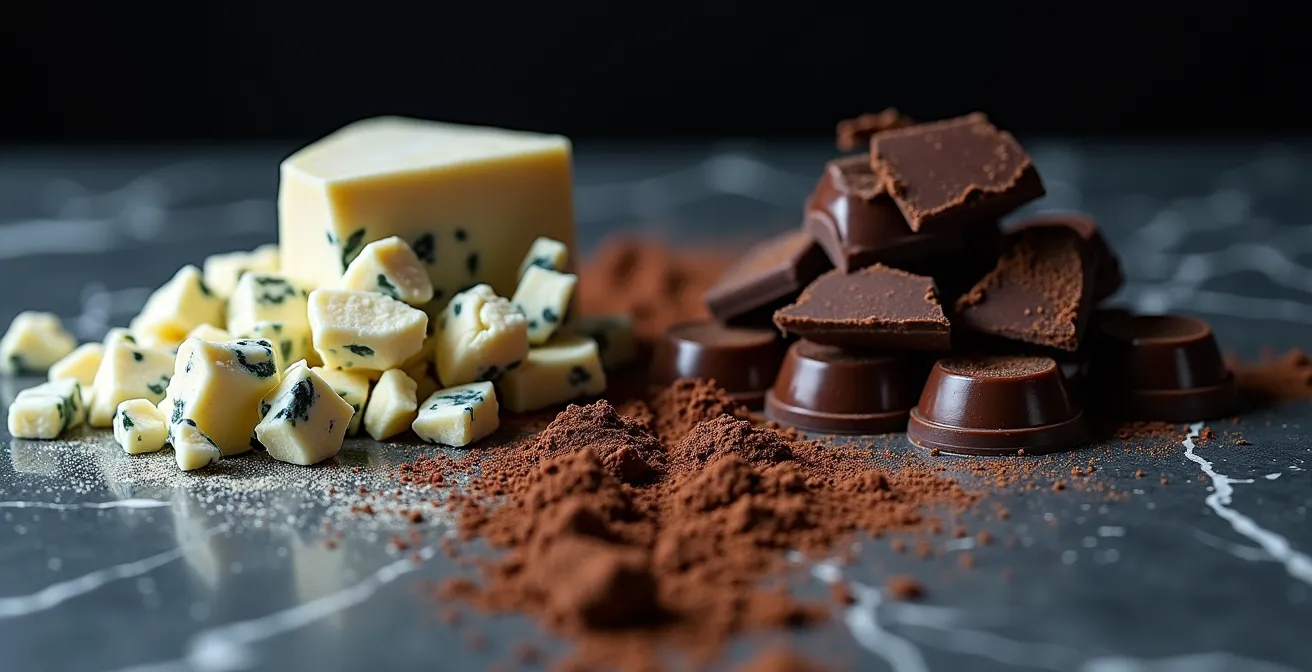
The most shocking food pairings are not accidents of taste but the result of shared chemical blueprints between ingredients.
- Ingredients that seem opposite, like salty cheese and sweet chocolate, often contain the same aromatic compounds, creating a natural flavor bridge.
- Understanding the science of taste—how salt enhances sweetness or acid cuts fat—allows you to move beyond recipes and invent new, harmonious combinations.
Recommendation: Instead of relying on tradition, start analyzing the flavor profile of your ingredients to predict and create your own surprisingly delicious pairings.
Place a piece of pungent, salty blue cheese next to a shard of bitter, dark chocolate. For many, the suggestion to eat them together sounds like a culinary dare. It defies conventional wisdom, which tends to segregate the sweet from the savory. The common explanation is a simple platitude: “opposites attract.” But as a chef who works with the very building blocks of flavor, I can tell you the reality is far more elegant and fascinating. This isn’t about opposition; it’s about a hidden, shared identity at the molecular level.
The world of flavor is governed by an invisible architecture of aromatic compounds. The reason a seemingly bizarre combination can create a moment of pure delight is that the ingredients, unbeknownst to our eyes and expectations, are speaking the same chemical language. This is the foundation of molecular gastronomy: deconstructing food to its core components to understand how and why flavors interact. It’s about moving past the surface-level tastes of sweet, salty, sour, bitter, and umami to explore the vast universe of volatile aromas that truly define an ingredient’s profile.
This principle doesn’t just apply to blue cheese and chocolate. It’s the key to understanding why soy sauce can deepen the flavor of a caramel, why basil can elevate a strawberry dessert, or why chili and mango are a classic combination. The secret lies not in random chance, but in a predictable, elegant science of molecular harmony. Forget what you think you know about pairing; we are about to look at the flavor profile blueprint that makes the bizarre delicious.
In this guide, we will deconstruct some of these surprising pairings to reveal the scientific principles at play. By understanding the ‘why’ behind these combinations, you’ll gain the tools to become a more adventurous and intuitive cook, capable of creating your own signature flavor experiences.
Summary: The Science of Unconventional Chocolate Pairings
- Why Does Sea Salt Make Sweet Chocolate Taste Sweeter?
- How to Infuse Chili into Chocolate Without Burning the Throat?
- Yuzu vs. Lemon: Which Acid Cuts Through Milk Chocolate Best?
- The High-Tannin Wine Mistake That Makes Chocolate Taste Metallic
- When to Add Fresh Basil to Ganache for Maximum Freshness?
- Why Does Soy Sauce Enhance the Nuttiness of Dark Chocolate?
- When to Add Spices: During Melting or Tempering for Better Release?
- Miso and Caramel: Why Are Savory Notes Taking Over Sweet Menus?
Why Does Sea Salt Make Sweet Chocolate Taste Sweeter?
The classic salted caramel chocolate is perhaps the most widely accepted “unconventional” pairing. The reason it works isn’t just about contrast. It’s a biological hack. Our tongues are equipped with specific taste receptors, and salt interacts with them in a fascinating way. When you taste something sweet, your sweet receptors send signals to your brain. However, salt triggers a different mechanism that amplifies this signal.
The science points to a specific glucose transporter on our tongue called SGLT1. This transporter is responsible for pulling sugar molecules into our sweet taste cells, but it only works in the presence of sodium. A pinch of salt essentially “unlocks” more pathways for sugar to be detected, making our brain perceive the food as sweeter than it actually is. It’s not an illusion; it’s an enhancement of the signal. This is why a sprinkle of sea salt on a brownie or a chocolate chip cookie doesn’t just add a salty note—it makes the chocolate taste more profoundly, intensely chocolatey and sweet.
As researchers from the Monell Chemical Senses Center discovered, this mechanism is a fundamental part of our taste perception. In a study published in the Proceedings of the National Academy of Sciences, they explain the mechanics:
The enhancement of sweet taste by sodium salts may be mediated by sodium-dependent glucose uptake into T1r3 taste cells via SGLT1.
– K.K. Yee et al., Proceedings of the National Academy of Sciences
So, when you’re adding salt, you’re not just seasoning; you’re manipulating the very mechanics of taste perception. This is the simplest form of molecular pairing, using one ingredient to chemically amplify another.
How to Infuse Chili into Chocolate Without Burning the Throat?
The combination of chili and chocolate dates back to the Aztecs, but mastering it is a delicate art. The goal is to capture the fruity, smoky notes of the chili while taming its fiery heat. The key lies in understanding the molecule responsible for that heat: capsaicin. Capsaicin is an oil-soluble compound, which means it doesn’t dissolve in water but readily infuses into fats. This is a crucial piece of information for a chef.
Since chocolate’s richness comes from cocoa butter—a fat—it is the perfect vehicle for capsaicin. To achieve a pleasant warmth rather than a scorching burn, you must control the infusion. A common mistake is to add raw chili powder directly into molten chocolate. This creates “hot spots” and an aggressive, lingering heat. The professional technique is to gently steep whole or dried chilies in warmed cocoa butter or a neutral oil first. This allows the fat to slowly extract the capsaicin and the chili’s more delicate aromatic compounds. You can then strain the infused fat and add it to your chocolate. This method gives you a homogenous, controlled warmth that blossoms on the palate and then fades, leaving behind the flavor of the chili, not just its burn.
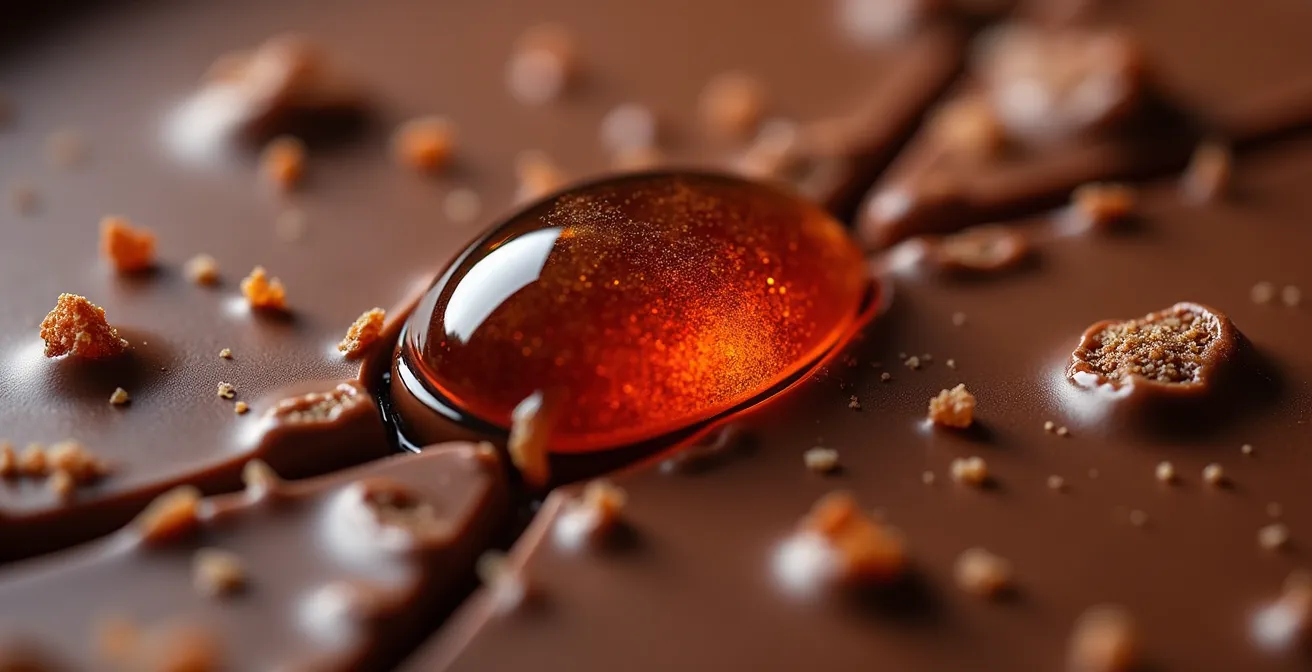
This controlled infusion allows you to balance the heat with the hundreds of other molecules present in chocolate. Chocolate is not a simple flavor; it’s a complex matrix of compounds. By managing the capsaicin, you allow the other flavors to coexist in harmony, creating a layered and evolving taste experience.
Yuzu vs. Lemon: Which Acid Cuts Through Milk Chocolate Best?
Acidity is a critical tool for a chef, especially when working with rich, fatty ingredients like milk chocolate. Acid provides a “lift,” cutting through the richness and preventing the palate from feeling heavy or cloying. But not all acids are created equal. The choice between yuzu and lemon, for example, comes down to their unique aromatic profiles and how they interact with the specific molecules in milk chocolate.
Milk chocolate is distinct from dark chocolate due to its high concentration of milk solids and specific aroma molecules called lactones. In fact, aroma analysis shows milk chocolate contains up to 200 times more lactones than dark chocolate. These molecules impart creamy, peachy, and coconut-like scents. While a simple, sharp acid like lemon can cut through the fat, its singular citrus note can sometimes clash with these complex lactones.
Yuzu, on the other hand, is a more complex citrus. It contains the sharp notes of grapefruit and lemon but also has highly floral, almost ethereal aromas reminiscent of mandarin orange. This complex aromatic bouquet shares compounds with the fruity and floral notes already present in both the cocoa and the milk solids. Therefore, yuzu doesn’t just cut the fat; it builds a flavor bridge, connecting its own profile to the chocolate’s inherent lactones. The result is a more seamless and sophisticated pairing, where the acid feels integrated rather than just layered on top. As Foodpairing research shows with passion fruit, pairing works best when acidity is combined with shared floral and citrus compounds to balance the fattiness harmoniously.
The High-Tannin Wine Mistake That Makes Chocolate Taste Metallic
Pairing wine and chocolate is notoriously difficult, and the common culprit for a bad match is a clash of tannins. Tannins are polyphenolic compounds found in grape skins (in wine) and cocoa beans (in chocolate). They create a sensation of astringency—a drying, puckering feeling in the mouth. Astringency itself is not bad; it’s excellent for cleansing the palate of rich, greasy foods. However, when you combine two highly tannic, astringent ingredients like a full-bodied Cabernet Sauvignon and a 70% dark chocolate, they don’t complement each other. They compete.
The result of this tannin-on-tannin battle is often an overwhelmingly bitter and unpleasantly metallic taste. The two sources of astringency strip the mouth of all lubrication, amplifying bitterness and masking the delicate fruity or floral notes in both the wine and the chocolate. The pairing fails because it lacks sensory contrast. A successful pairing needs balance—sweet with salty, sour with rich, and, in this case, astringent with fatty.
This experience can be particularly intense for a portion of the population. According to taste perception research, up to 25% of the population are ‘supertasters’, individuals with a much higher density of taste buds. These individuals are genetically more sensitive to bitter compounds and tannins, making a high-tannin pairing almost unbearable. To successfully pair wine with chocolate, you need a wine with lower tannins and sufficient sweetness or fruitiness to balance the chocolate’s bitterness, like a Port or a late-harvest Riesling.
When to Add Fresh Basil to Ganache for Maximum Freshness?
Pairing fresh herbs like basil with chocolate might seem odd, but it works because of shared aromatic compounds. Basil contains volatile molecules like linalool (floral, citrusy) and eugenol (clove-like, spicy), which are also found in certain types of cocoa beans. This shared molecular blueprint creates a surprising but logical harmony. However, the success of this pairing hinges on one critical factor: timing.
The aromatic compounds in fresh herbs are extremely volatile and heat-sensitive. If you add fresh basil leaves to your cream while it’s boiling, you will destroy these delicate molecules, leaving you with a cooked, hay-like flavor instead of a vibrant, fresh one. The heat has broken down the very compounds that made the pairing work in the first place. This is a common mistake that turns a potentially brilliant pairing into a disappointing one.
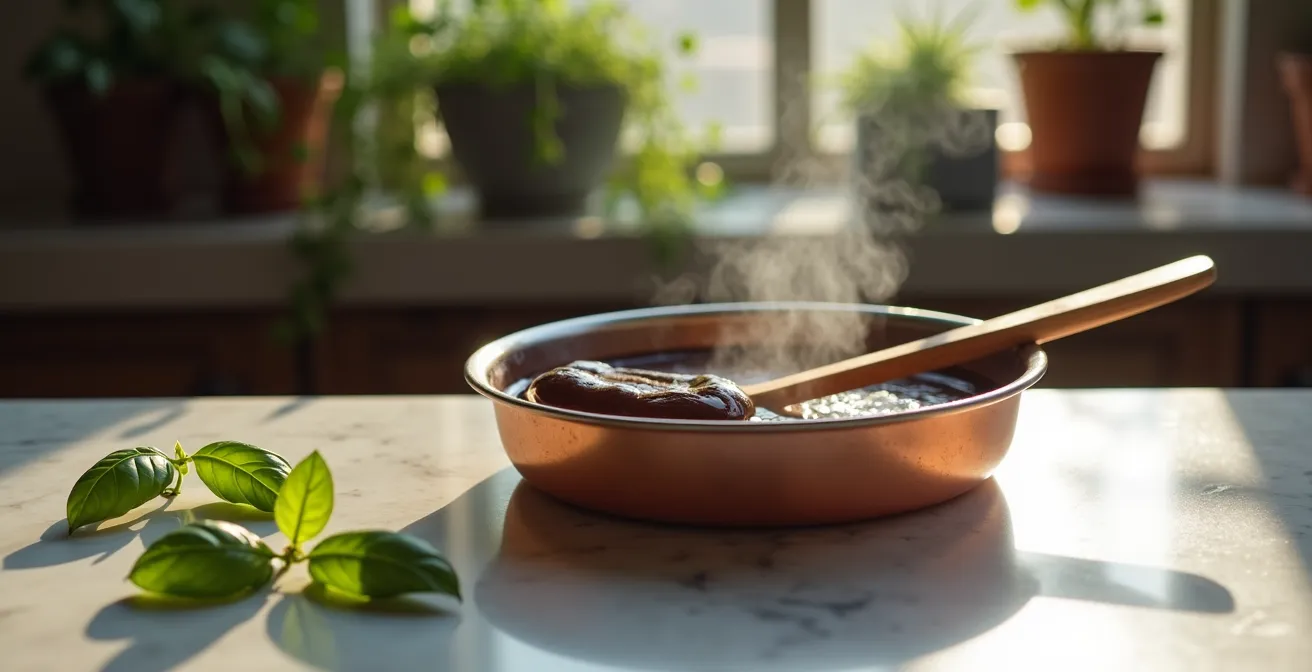
The correct technique is a cold or gentle infusion. The ideal method is to bring your cream to a simmer, remove it from the heat, and *then* add the fresh basil leaves. Let them steep in the hot-but-not-boiling cream for 15-30 minutes, allowing their volatile oils to infuse gently without being destroyed. Afterward, strain the cream to remove the leaves and proceed with making your ganache. This preserves the bright, peppery freshness of the basil, allowing it to dance with the more than 1500 different aroma molecules in chocolate for a truly dynamic flavor profile.
Why Does Soy Sauce Enhance the Nuttiness of Dark Chocolate?
Adding soy sauce to a chocolate dessert might be the most counterintuitive pairing of all, yet it’s a secret weapon for many pastry chefs. The magic lies in two key processes: fermentation and the Maillard reaction. Both chocolate and soy sauce are fermented products. This fermentation process creates a deep reservoir of complex flavor precursors.
When cocoa beans are roasted and soy sauce is brewed, these precursors undergo the Maillard reaction—the same chemical process that browns toast or sears a steak. This reaction generates hundreds of new aromatic compounds, many of which are shared between the two ingredients. These shared notes are often described as nutty, roasted, caramellic, and malty. By adding a small amount of soy sauce to a chocolate recipe, you’re not making it taste like soy sauce; you’re reintroducing and amplifying the roasted, nutty notes that are already part of chocolate’s inherent flavor blueprint. It also adds a touch of salt (which enhances sweetness) and a deep umami savoriness that gives the overall flavor incredible depth and length.
This principle of shared origins through processing is a cornerstone of advanced pairing. As one expert from Colorado State University’s Food Innovation Center explains, the initial fermentation is key to the final flavor we taste.
The fermentation results in so many precursor compounds that then later when we roast the chocolate, those compounds get converted into what we then taste in the final chocolate.
– Caitlin Clark, Colorado State University Food Innovation Center
Soy sauce simply adds more of these roasted, umami-rich compounds back into the mix, making the chocolate taste more complex and intensely itself.
When to Add Spices: During Melting or Tempering for Better Release?
The timing of when you add spices to chocolate is as important as which spices you choose. The decision depends entirely on whether the spice’s key aromatic compounds are fat-soluble or water-soluble, and how they react to heat. Adding a spice at the wrong stage can either hide its flavor or make it overpowering.
For fat-soluble spices like cinnamon, nutmeg, cardamom, and chili, the best time to add them is during the melting process. Their aromatic compounds need to dissolve into the cocoa butter to be fully expressed. By mixing the ground spices into the chocolate as it melts, you are essentially creating a slow infusion, allowing the fat to become a carrier for their flavor. This ensures the spice is evenly distributed and its flavor is deeply integrated into the chocolate.
Conversely, adding delicate, heat-sensitive flavors or extracts should happen at the very end of the process, post-tempering or during the cooling phase. This applies to things like floral extracts (rose or orange blossom water) or very fine, volatile ground spices whose top notes would be burned off by prolonged heat. Adding them too early would destroy their complexity. The key is to know your spice and its primary compounds. This methodical approach is the basis of all successful flavor creation.
Your Action Plan: The 3-Step Food Pairing Methodology
- Aroma Analysis: Select your base ingredient (e.g., dark chocolate). Use a flavor wheel or online database to identify its key aroma families (e.g., roasted, fruity, spicy). This is your flavor blueprint.
- Contrast Mapping: To create complexity, layer at least two contrasting tastes. If your base is bitter and rich (chocolate), map out a salty element (fleur de sel) and a sour element (raspberry coulis).
- Textural Build: A great pairing engages more than just taste. Intentionally add two or more contrasting textures. Pair a smooth chocolate mousse with a crunchy element (toasted hazelnuts) and a chewy component (candied orange peel).
Key takeaways
- Flavor pairing is not about “opposites attract” but about identifying shared aromatic compounds between ingredients.
- Taste can be chemically manipulated: salt amplifies sweetness by acting on specific taste receptors on the tongue.
- Successful pairings require sensory contrast in both taste (sweet/salty) and texture (creamy/crunchy) to avoid palate fatigue.
Miso and Caramel: Why Are Savory Notes Taking Over Sweet Menus?
The rise of ingredients like miso, gochujang, and tahini in desserts is not a fleeting trend. It represents a fundamental shift in our understanding of what makes a dish satisfying. For decades, Western pastry was dominated by a singular focus on sweetness. But a purely sweet dish can be one-dimensional and quickly lead to palate fatigue. The introduction of savory, fermented, and bitter elements creates a more complex and engaging experience.
Miso, a fermented soybean paste, brings a trifecta of complexity to a sweet dish like caramel. It adds profound umami, a savory taste that adds depth and a long-lasting finish. It provides saltiness, which we know enhances sweetness. And it brings complex, funky notes from its fermentation process that contrast beautifully with the simple, burnt-sugar taste of caramel. This complexity keeps our brains engaged, bite after bite. As the Foodpairing research team notes, variety is key to satisfaction.
Foods that lack texture and flavor variety can become boring after just a couple of bites, but those that include a variety of aromas, textures, and tastes will offer a more satisfying experience.
– Foodpairing Research Team, To’ak Chocolate Blog
This move towards savory notes also taps into our innate biological wiring. Humans are equipped to detect a vast range of flavors beyond simple sweetness. In fact, human genetic research has identified 26 functional TAS2R genes that allow us to perceive over a thousand different bitter compounds. By ignoring bitterness and savoriness, traditional desserts were only appealing to a fraction of our sensory potential. The new savory-sweet movement isn’t about replacing sugar; it’s about building a bigger, more complex symphony of flavor where sweetness is just one instrument, not the entire orchestra.
Now that you understand the chemical blueprints behind these pairings, the next step is to stop following recipes and start architecting your own. Use these principles as your guide to experiment with the flavors in your own kitchen and create combinations that are uniquely, surprisingly, and scientifically delicious.